

Bali Underwater Photography

Bali Underwater Photography

Bali is located at the very heart of the world’s richest marine biogeographic zone: The Indo-Pacific. The island receives very plankton-rich waters and so contains a stunningly diverse underwater ecosystem. Bali’s diving is a delight for underwater photographers and videographers.

Bali is renowned not only for its variety of dive locations but also for the extra-ordinary density and diversity of marine life, with many sites for macro or wide-angle photography.
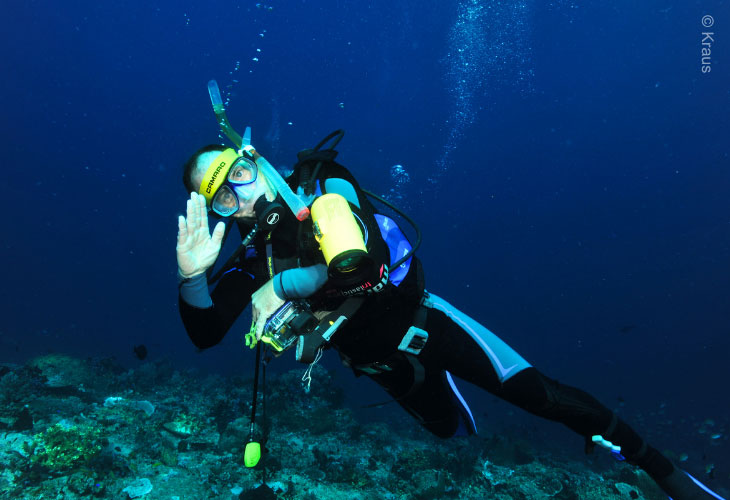
Bali-Underwater-Photography

Dive Sites for Underwater Photography

We are fortunate to have amazing muck-sites in Bali. Muck diving sites are shallow, muddy and bursting with critters. In particular, Secret Bay and Puri Jati are favourites for underwater photography – you can read more detailed descriptions on the Bali Muck Diving Sites page.

Other popular muck diving sites include:
Tulamben River Bed
Tulamben Tianyar
Seraya Slope
Amed Ghost Bay
Padangbai’s Jepun and Turtle Neck

AquaMarine also has quite a number of unpublicised muck sites which we would be happy to include in any Underwater Photography or Videography Dive Safari.

We have Safari Dive Packages designed specifically with photographers in mind. The packages are Macro Photographers’ Dream and Write Your Own Safari.

Dive-Sites-for-Underwater-Photography

Learn Underwater Photography in Bali

Are you just beginning to explore the world of underwater photography? Do you want to improve your skills?

You might decide to do the PADI Digital Underwater Photographer Speciality course. This underwater photography course can be done either as part of your Dive Safari or on a Day Dive Trip.

PADI Digital Underwater Photographer Speciality Course

Click below for more PADI Dive Courses Information:

Dive Site: Tulamben Area

Tulamben Area: from Muck to Pelagics Enthusiast

Tulamben Area offer a variety of conditions and types of diving. There are, in fact, quite a number of dive sites in the Tulamben Area (ie: outside Tulamben Bay). Most are mainly to the south east, but here we are only detailing the better-known sites. Because these sites are outside Tulamben Bay, they are more exposed and can be affected by currents however they are suitable for all levels beyond beginner.

Some of these Tulamben Area dive sites are popular areas for macro (muck) diving revealing many small critters in easy-to-photograph environments. The best known is Seraya Slope.

Tulamben-Area-Dive-Site

Tulamben Area Dive Sites

These Tulamben Area dive sites include Seraya for muck-diving and Batu Kelebit, Palung-Palung, Kubu, and Emerald for other marinelife including reef sharks, Napoleon wrasse and Bumphead parrotfish.

Seraya Slope

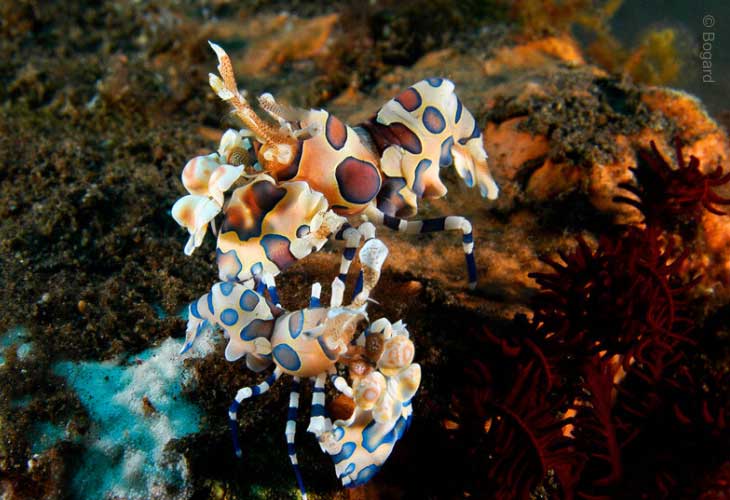
As well as the main, central site called ‘Seraya’, named for a nearby resort, this small area also encompasses various individual muck sites. As with all the Tulamben Area dive sites, these muck diving sites have a black sand bottom and little coral growth. Seraya Slope is one of our favourite muck sites for interesting discoveries. The macro life here includes a wide range of shrimps, pipefish, crabs, nudibranchs, and other fabulous creatures.

Seraya-Slope-Shrimps-Harlequin

Kubu

Muck divers will find many nudis and other macro creatures dotted around the black sand slope, together with eels, cuttlefish, Leaf scorpionfish and more.

Two small walls (approx 25m depth with viz of 20m) offer gentle drift-diving past numerous sea fans (with Pygmy seahorses) and a variety of sponges, as well as hard and soft corals. Kubu has the highest concentrations of lionfish and Blue-spotted rays in the Tulamben area.

Kubu-Wreck-and-Divers

Palung-palung

Palung-palung is covered in colourful soft corals and alive with butterflyfish, sea fans, swaying Garden eels, hunting day octopus, and large schools of fusiliers. Also, you will quite often see some of Tulamben’s school of huge Bumphead parrotfish munching on the coral and White-tip and Black-tip reef sharks looking for their next meal.

Palung-palung-Parrotfish-Bumphead

Batu Kelebit

An unusual and exciting site just outside Tulamben Bay that provides opportunities to see pelagics as well as reef life different from that inside the Bay.

Batu Kelebit is basically two large rocks that lie just offshore. As you follow the sloping reef deeper, the dive site becomes more dramatic. You’ll see three steep ridges encrusted with a wonderful diversity of hard and soft corals, fire and table corals, many beautiful sea fans, and sponges.

Tulamben-Area-Batu-Kelebit-Dartfish-Fire

Emerald

There is a sunken car and some other pieces of artificial reef on the sandy slope – which itself is a natural home to cuttlefish, gobies, Decorated dartfish, Helmut gurnard and nudis. There are some areas of Garden eels too.

Around 20-30m depth, the reef becomes richer with a large number of sponges, including Barrel sponges, and is a good place to see reef sharks. Both Thresher sharks and Eagle rays are (occasionally) seen here. There is a small drop-off with Elephant ear sponges and hard corals, and some large, semi-resident Napoleon wrasse.

Tulamben-Area-Emerald-Cuttlefish

AquaMarine Diving – Bali could easily put together a 7+ Day Tulamben Bay and Tulamben Area Dive Sites Safari with 3-4dives/day at a different site each day.

Tulamben Area Day Trip

Click below for more Bali Diving Information:

Dive Site: 120m USAT Liberty Shipwreck

USAT Liberty Shipwreck: Possibly the World’s Easiest Wreck Dive

The Liberty was torpedoed by the Japanese off the coast of Lombok. Although attempts were made to tow the ship to north Bali, it was taking on too much water and therefore was semi-beached at Tulamben. During the last eruption of Mt Agung, Bali’s highest and most sacred mountain, the earth tremors roched the boat down the beach and into the sea.

The USAT Liberty Shipwreck lies a mere 30m offshore, and almost parallel to the beach, making it suitable for all levels of certification and experience. The shallowest part of the wreck where it touches the sand slope is at 5-10m while average depth along the middle is 16-20m. The lower edge of the wreck, the furthest down the slope, is 20-28m at high tide.

The wreck is pretty broken up, no penetration possible. But you can still see the guns, toilets, boilers, anchor chain, etc. A truly lovely dive site!

USAT-Liberty-Shipwreck

USAT Liberty Shipwreck for Underwater Photographers

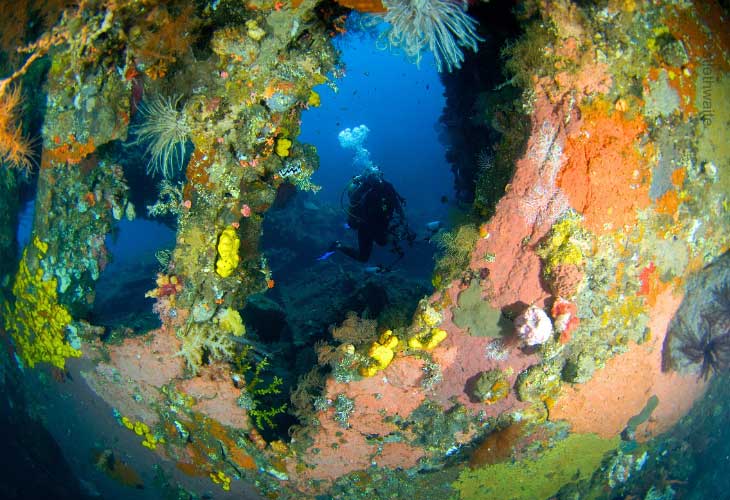
The USAT Liberty Shipwreck is very popular with underwater photographers/videographers as it is totally encrusted in anemones, gorgonian fans, hard and soft corals.

In addition the black sand provides an excellent colour contrast for the incredible variety of marine life, which includes a school of 100s of Big-eyed trevallys (length 30cm/12in) and over 400 other species of fish.

Diving on, in and around the Liberty Shipwreck, you are quite likely to see a high percentage of the marine life shown in any Indo-Pacific Reef Guide book. That is what keeps divers coming back time and time again.

Each area of the Liberty Shipwreck offers something different to see!

USAT-Liberty-with-Anemones

Night and Early Morning Wreck Dives

Night diving on the Wreck is always great but particularly so during the full moon. You may see Spanish dancers and the school of huge Bumphead parrotfish in their sleeping cocoons. Also Flashlight fish, Bobtail squid, even phosphorescence, and the basket stars! – where else in the world could you make such an easy and varied Night Dive?

If you dive early enough, 06-07:00, you may see the school of Bumphead parrotfish heading out for breakfast. This is also the most likely time of day to see Mola-Mola, Manta rays, turtles and any Whalesharks passing through. In our opinion, it’s the best time of day to dive the wreck.

USAT-Liberty-Wreck-Dives