


Mola-Mola (Ocean sunfish) in Indonesia

Mola-Mola (Ocean sunfish) in Indonesia

The massive Ocean sunfish (Mola) is a unique and odd-looking fish. Mola are the world’s heaviest bony fish, reaching up to 1,000kg, and can have 300 million eggs. With their flat, tail-less body, they are not only the world’s largest bony fish, but also one of the most elusive fishes in the world. Sunfish develop their truncated, bullet-like shape because their back fin simply never grows; instead, it folds into itself as the enormous creature matures, creating a rounded rudder called a clauvus.

Their two long dorsal fins mean Mola-Mola can be 3.5m in height but, although they have rounded bodies, they are very narrow when seen from front/back (“mola” is Latin for ‘millstone’).

Mola-Mola in German is ‘schwimmender kopf’ = floating head; in French, Poisson Lune (Moon Fish). In fact, most languages have a name for Mola-Mola (some make more sense than others!).

Ocean-Sunfish-Indonesia

WHERE in Indonesia to see Mola-Mola

Bali: The most likely place in Indonesia to see Molas. They are seen off the east coast of the mainland, and around the offshore island of Nusa Penida.

South of Komodo: The site is actually famous for Manta rays however sunfish are sometimes also seen.

Pantar Strait, Alor: Molas come up from the very deep waters to get cleaned and can be found lying flat on the surface.

WHEN to see Mola-Mola

To write from personal knowledge and experience, I’ll focus on Bali’s Mola which I believe are in Bali’s waters year-round (recorded as deep as 360m).

Mola suffer from external parasites (up to 40 kinds!) which need to be removed by ‘cleaner fish’. The cleaner fish live much shallower on coral reefs.

Therefore, from July to mid-November, Mola-Mola drift up on the incredibly cold, but very fertile, upwelling from the 3.5km deep Bali Trough off Bali’s southern coast, to get cleaned. That is how we are able to see them at recreational diving depths.

Seven days from now, our Nusa Penida trip will be focusing on Mola-Mola sites. So, if you are aiming for Mola-Mola this year, contact our Dive Travel Consultants and get yourself signed up. In addition, make sure you don’t miss out our Mola-Mola special offers.

HOW to see Mola-Mola

Despite their size, if they don’t feel safe, Mola won’t come close to the reef or approach the schools of fishes waiting to clean them.

If you see a Mola (or 4) or your AquaMarine Dive Guide spots one (or 7), just stop moving. At that stage, do not try to approach the Mola, two flips of those long dorsal fins, and they will be gone!

You need to stay really, really still, close to the reef. Let the fish come closer, settle on the reef, and go into their Cleaning Meditation. Once a Mola finds a place to get cleaned, it tips 45 degrees upwards, and often slightly sideways, and genuinely seems to go into a trance.

When that happens, usually you and your group, rather than the Molas, will be the first ones to leave as you are limited by maximum bottom time, or air supply. Plus the water can be very cold.

Ocean-Sunfish-Bali

Movement and Diet

Mola are clumsy (but fast) swimmers, waggling their large dorsal and anal fins to move and steering with their clauvus.

Ocean sunfish mainly eat jellyfish – obviously in huge quantities! – so plastic bags pose a big hazard to them (this also applies to turtles).

Protection for Mola-Mola (Ocean sunfish)

The Coral Triangle Center (CTC, a non-profit organization engaged in Coral Reef Conservation) has proposed to the Indonesian Government to include Mola as one of the country’s Protected Animals.

PS: I’ll let you into a little secret – ssshh! Here in Bali we actually have Mola alexandrini rather than Mola-Mola, but “Mola-Mola” is so much more fun to say and it’s used Bali-wide.

Blue Project by AMD-B: AquaMarine’s Ways to Preserve Marine Conservation

AMD-B’s Marine Conservation over the Past Five Years

by Ara, AMD-B’s Environment Officer

What are your first thoughts or images when you hear the words “Blue” and “Project”? Perhaps something connected to ‘water’? Or maybe: A dive centre running an Environmental Conservation programme – does that ring any bells? Because that’s us, that’s what AquaMarine Diving – Bali is doing.

Let me tell you more details.

AquaMarine became established as an Ocean Ambassador to run environmental conservation activities under the name of ‘Blue Project’. In addition to introducing eco-awareness to our PADI students and guests on Recreational Diving Trips, we wanted to show our dedication to marine conservation.

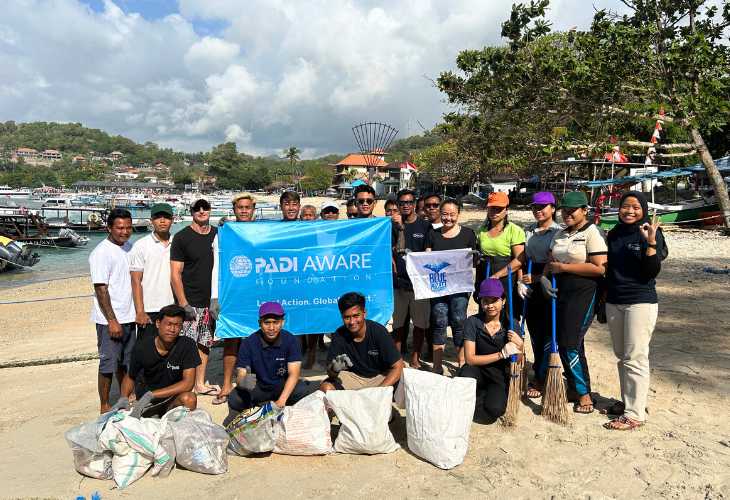
After BP was launched, we joined ‘Adopt The Blue’ by 100% AWARE programme by the PADI AWARE Foundation. The two dive locations AMD-B adopted are both outside Padangbai on Bali’s east coast: The Jetty and Mushroom Point – Turtle Neck

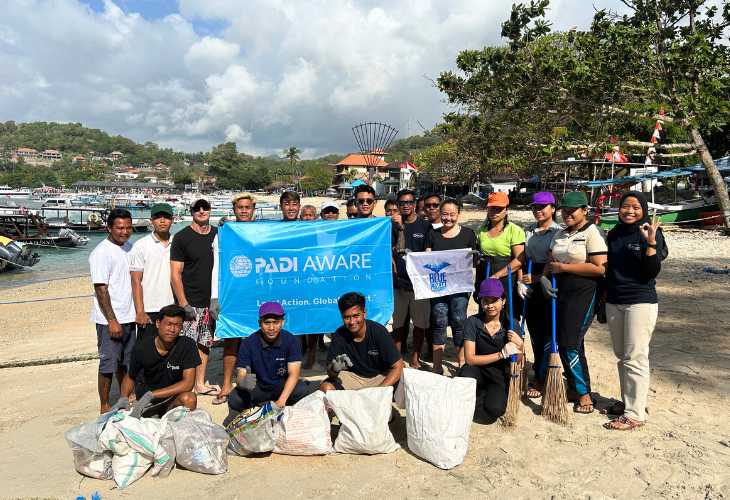
The whole AMD-B Team put our hearts and full commitment to do Dive Against Debris (DAD) every single month since that time. We have never stopped, not once even during COVID lockdown. We will always continue our commitment.

We have also diversified our activities, not only for AMD-B’s annual Interns but also for divers and PADI students who want to join us.

Blue-Project-Adopt-The-Blue

Blue Project 2019 and 2020

AMD-B’s 11 Months Zero-to-Hero PADI Divemaster Interns were introduced to charities and NGOs such as:

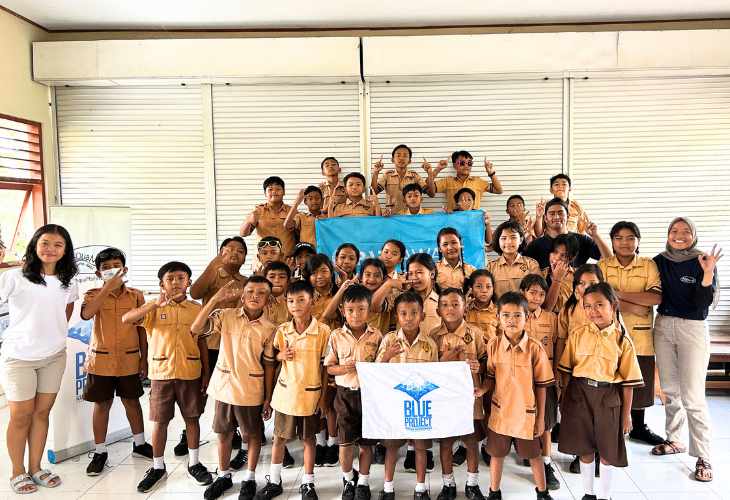
Waste Management site visits: ecoBali in 2019 & Kura-Kura Bali in 2020; Mangrove Conservation: Mangrove Nusantara; Turtle Conservation and Rehabilitation: Kurma Asih in Perancak, NW Bali; Coral Reef Restoration (local community): Nusa Dua Reef Foundation; School Visits for Environmental Presentations and Group Beach Clean-ups.

You can see more of our activities on AMD-B’s Blue Project website page: AquaMarine Diving – Bali: Eco Awareness Bali – Blue Project

Blue Project 2021 and 2022

Due to COVID-19, 2020 was a quiet year for Blue Project. In addition, COVID-19 had a mega impact on AquaMarine’s operations.

But ‘BP by AMD-B’ tried to not stand-still during the Pandemic.

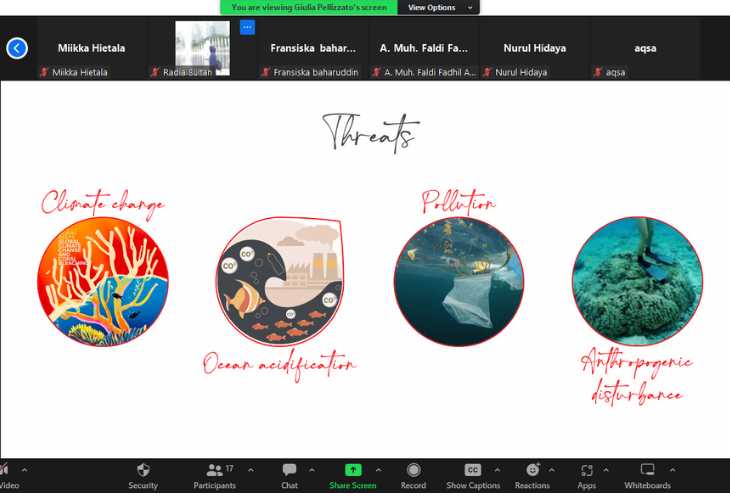
We introduced a weekly ‘Environmental Webinar’ series and had some really amazing speakers who provided AMD-B and our audience with a lot of useful and diverse information. The speakers were from individuals to CEOs, and came from local grass-roots programmes as well as international conservation organisations. Sometimes time-zones were a challenge but we made it.

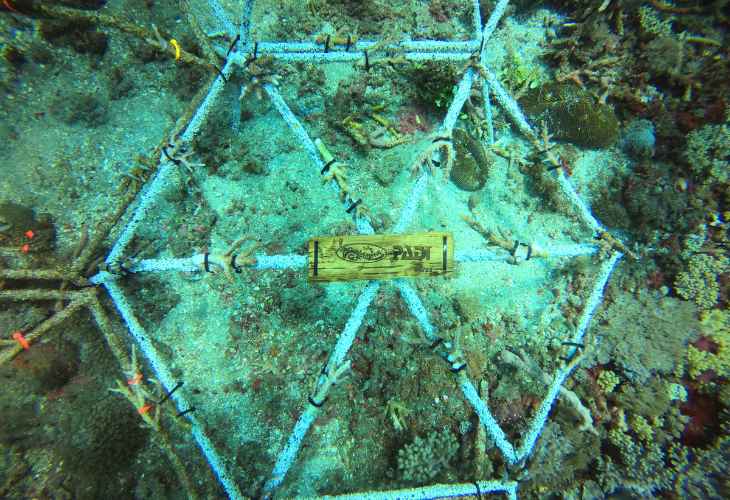
During the same time period, AMD-B’s ‘Dive Against Debris’ programme expanded into installing 10 MARRS Reef Structures, Blue Project’s Coral Restoration Project. AMD-B was assisted by LivingSeas.

So, from that point forward, BP’s monthly Dive Against Debris has included additional coral monitoring activities.

Blue-Project-Coral-Restoration

Blue Project 2023

Both AquaMarine Diving – Bali and ‘Blue Project by AquaMarine Diving – Bali‘ are back and operating normally!

This year we are fulfilling our goal to grow Blue Project. We are also aiming towards AMD-B’s stated goals including “Conserve the ocean” and “Run our diving business in a more sustainable way” as well as educate and set an example for local communities in Bali.

BP by AMD-B also focuses on raising eco-awareness among visiting divers of all nationalities as well as local divers. We welcome with wide open arms the people who would like to join our Blue Project programmes – notably the Dive Against Debris event on the 4th of every month.

What could be better than to have a good relationship with the ocean! It gives you a remarkably good feeling to get great feedback from Mother Nature.

Introduction to Bali’s Scuba Diving

Introduction to Bali’s Scuba Diving

Bali is famous for its complex Hindu culture, colourful ceremonies, magnificent volcanic and coastal scenery as well as the artistic and welcoming nature of the Balinese people. With so much to do topside, surely there cannot be a more fascinating island on the planet!

Repeatedly drawing internationally-recognised underwater photographers and journalists from around the globe, Bali is the ideal destination for divers and non-divers, families, groups and individuals.

Bali is situated at the heart of the Indo-Pacific, the world’s richest marine biogeographic zone. The island therefore receives very plankton-rich waters and so contains a stunningly diverse underwater ecosystem as well as many totally different physical environments.

Bali's-Scuba-Diving-Reef-Scene-with-Soft-Corals-and-Anthias

Bali’s dive sites offer great diversity: vertical walls and sand slopes; steel and wooden shipwrecks; limestone shorelines and black, volcanic outcrops; peaceful bays and ripping currents; deep, coral-covered ridges, shallow seagrass beds and big bommies, as well as both shore- and boat-diving.

Pelagics include year-round Manta rays, occasional Whalesharks and, from July to mid-November, Mola-Molas (the weird-but-wonderful Ocean sunfish).

There are over 2,000 species of reef fish in Bali’s waters, and then there are the eels, crabs, lobsters, turtles, starfish, shrimp, and nudibranchs … Mimic octopus and Wonderpus, Ambon scorpionfish, Rhinopias, Mandarinfish, Pyjama and Banggai cardinalfish, ghostpipefish, Pegasus seamoths and Flamboyant cuttlefish, and more.

The reefs contain profuse hard and soft corals, Gorgonian and other seafans, coral bushes, and sponges including some massive barrel sponges…

…. so why not come and discover the secret FOR YOURSELF!

Bali's-Scuba-Diving-Mandarinfish