


Dive Sites: Padangbai & Candidasa

Padangbai and Candidasa Dive Sites: Reef & Muck Diving and Unique Marinelife

Amuk Bay – with Padangbai to the south and Candidasa at the north – has some of Bali’s best dive sites and may be Bali’s premier location for sharks.

The Blue Lagoon area, just outside Padangbai, is a treasure-trove of marinelife that includes reef sharks, rhinopias, cuttlefish, Leaf scorpionfish, frogfish, lionfish, nudibranchs and a huge area of Staghorn coral. The area also offers excellent night-diving with Cat sharks, Spanishdancers, crustaceans, basketstars and hunting cephalopods to be found.

Padangbai-and-Candidasa-Octopus

Mimpang is the name given to three rock pinnacles that break the surface. The southern, deeper end offers a spectacular wall with profuse corals, many fish and the opportunity to see pelagics. There are often thermoclines around 20m.

The breath-taking diving at Tepekong, a 300m long rock, is for experienced divers only due to the steep walls, cold water and (often strong) currents. In Tepekong’s famous ‘Canyon’, with its swirling waters and dramatic, craggy walls, we see schooling fish such as sweetlips, possibly Mola-Mola (Ocean sunfish) in season, White-tip reef sharks and turtles.

Padangbai-and-Candidasa-Shark

Biaha, a little to the north, offers some of Bali’s most stunning diving (it’s my favourite site). Here you can see a wonderful mixture of fish, sharks and frequent pelagic visitors set against a backdrop of chiselled black walls with beautiful, healthy corals and often superb visibility. Inside Biaha’s cave you can find anything from Nembrotha nudibranchs to sleeping White-tip reef sharks. Biaha is best dived at slack high tide and can be quite surgy.

It is essential your Dive Guide has extensive experience at Mimpang, Tepekong and Biaha because not only can conditions change without warning – both up and down currents are quite common.
Lady Porter of Tulamben

The Lady Porter of Tulamben

by Mardia, AMD-B’s 2023 Divemaster Internship

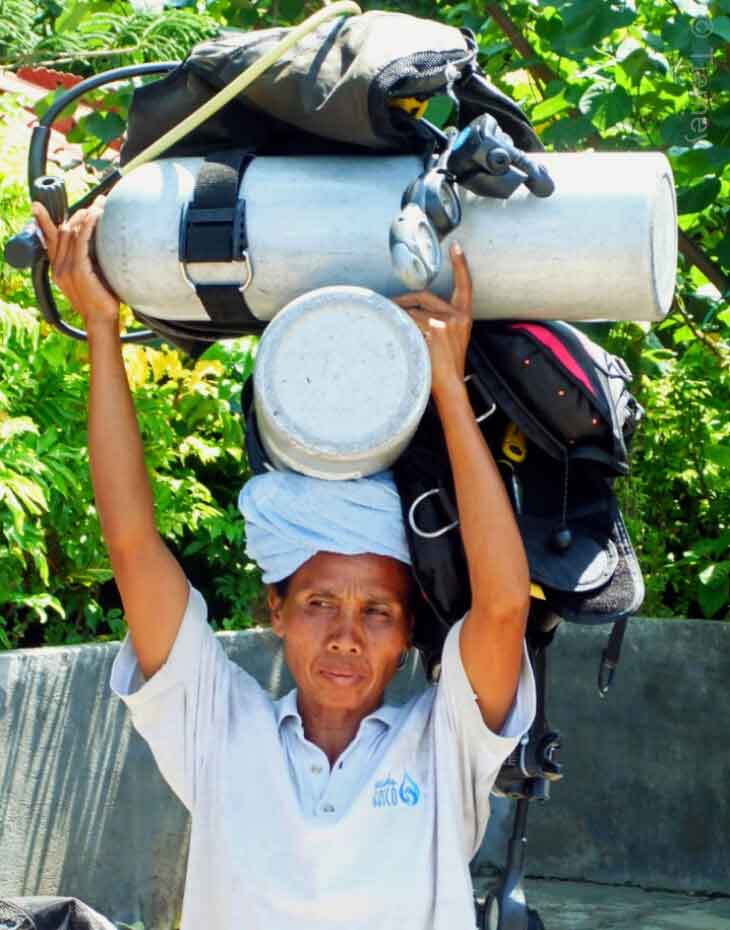
In the 1980s, Tulamben beach was a tranquil haven that had yet to be discovered by tourists. At the time, hotels, restaurants, dive shops, and other facilities were scarce. However, the calm atmosphere changed when a vehicle carrying divers showed up. Several locals ran to meet the parked car, resulting in a commotion between the helpers, who were aiding in moving the diving equipment to the dive site.

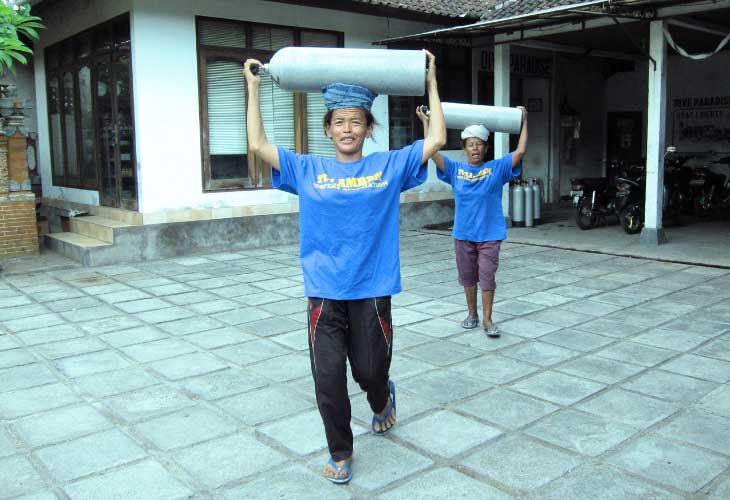
Around 1983, a group of female helpers decided to organise themselves to prevent any more commotion. This group became known as the Lady Porters of Tulamben. These lady porters offer a unique service that makes it easier for divers to transport their scuba tanks and other diving equipment weighing up to 15 kg to the dive site. Since Tulamben’s beach is rocky, having this service available is incredibly convenient.

The-Lady-Porter-of-Tulamben

Lady Porter Organization

The lady porters of Tulamben became the unsung heroes of diving in Bali, and the diving community appreciated their service very much. They established a very successful system that included cooperative cash management in their community. For instance, the coop provided money during holidays to assist in paying for religious ceremony supplies, and they also succeeded in providing jobs for the villagers. Many female porters were able to provide their families with a better life by allowing their kids to attend school. In the 1990s, the women porters were officially organised as the Sekar Baruna Cooperative. The word ‘Sekar Baruna’ means either flowers from the sea or fortune from the sea.

Tulamben’s lady porters are renowned for their incredible strength and endurance. They are hard working, enthusiastic about their jobs, and always smiling. They take pride in their work and are always willing to go above and beyond to ensure divers have an enjoyable diving experience. One thing that distinguishes the lady porters is their sense of community. They work as a team, and this makes the lady porters a vital part of the Tulamben diving community.

Lady-Porter-Sekar-Baruna

Dive Site: Tulamben Bay

Tulamben Bay: A Dive Site for Everyone

The small village of Tulamben, famous for both its black volcanic sand and the 120m USAT Liberty shipwreck, is quite rightly Bali’s most popular diving location. Tulamben is also the place in Bali where you are most likely to see internationally-recognised underwater photographers and journalists.

Tulamben Bay, like the rest of Bali, is situated in the world’s richest marine biogeographic zone: the Indo-Pacific. Due to Tulamben’s location on Bali’s north east coast, the Indonesian Throughflow (the major ocean current that moves from the Pacific to the Indian Ocean) supplies the bay with very plankton-rich waters.

This, together with the different physical environments within the bay, gives Tulamben a remarkably diverse underwater ecosystem.

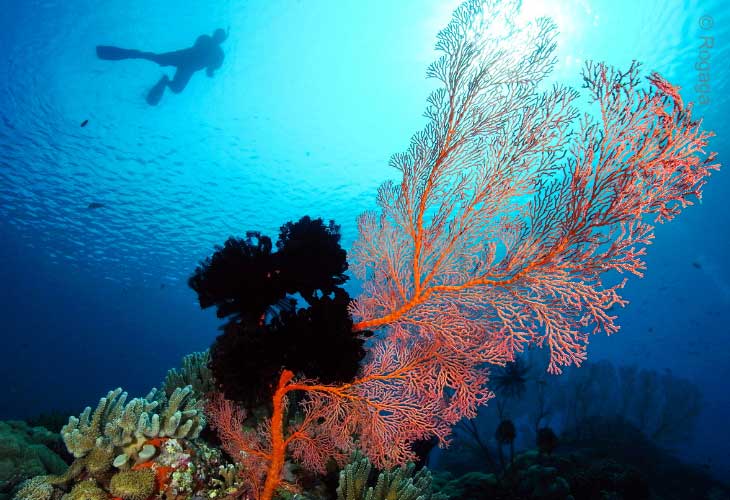
Tulamben-Bay-Sea-Fan-Gorgonian

Popular Tulamben Bay Dive Sites

The 120m USAT Liberty shipwreck lies 20m offshore in depths of 5-30M, and is completely encrusted with hard and soft corals. The extraordinarily dense marinelife includes Clown frogfish (juvenile and adult), Bumphead parrotfish, a huge school of Big-eyed trevally, Leaf scorpionfish, and various pygmy seahorses. Wonderpus and Mimic octopus can be seen on early morning dives. The Wreck offers magical night diving with flashlightfish, Spanish dancers and cephalopods.

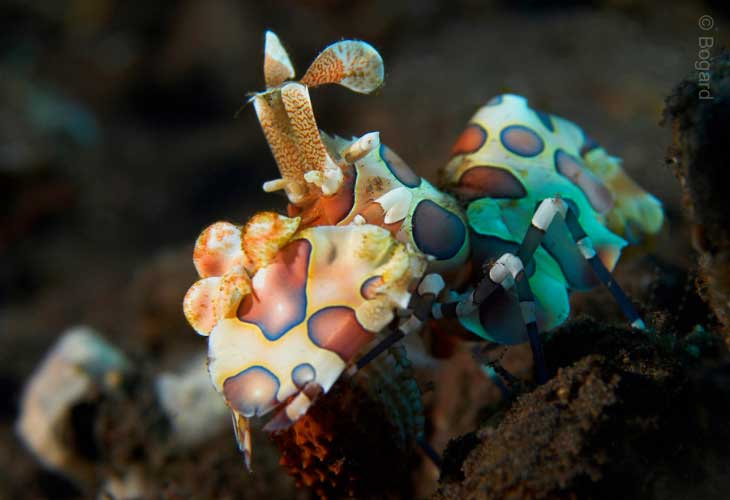
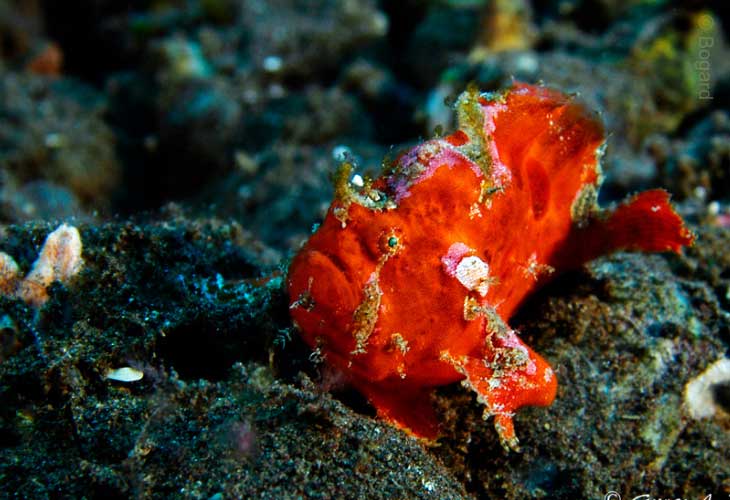
The Coral Garden, which runs eastwards from the USAT Liberty shipwreck, provides wonderful shallow dives where you’re limited by air supply rather than bottom time. You can expect to see a wide selection of marinelife from Thecacera nudibranchs, Harlequin shrimps and Boxer crabs, to frogfish and Ribbon eels in all stages of development.

Tulamben-Bay-Shrimp-Harlequin

On The Wall/Drop-off you will find a wide variety of sponges, hard and soft corals, and Gorgonian seafans (one of 3m diameter) – while the larger marinelife includes reef sharks, with occasional sightings of Whalesharks and Mola-Mola. During the rainy season (Dec-March) the reef flats can receive some run-off but continue to yield surprises.

Being shore entry, Tulamben is also great for snorkelling and Discover Scuba Diving. Please note Tulamben has a stony, rather than sandy, beach.

Slightly north of Tulamben is Kubu, home of Bali’s newest shipwreck. Kubu reef has Gorgonian seafans, bommies with soft corals, scores of nudibranchs, and generally calm conditions.

Taking a local outrigger five minutes east of Tulamben Bay brings you to the sites of Palung-Palung/Alamanda, Batu Kelebit and Emerald Point. Within the Tulamben area, these are the sites where you are most likely to see pelagics including, on rare occasions, dolphins.

Tulamben-Bay-Frogfish-Freckled