


Ornate Ghost Pipefish

Ornate Ghost Pipefish in Bali: A Master of Underwater Camouflage

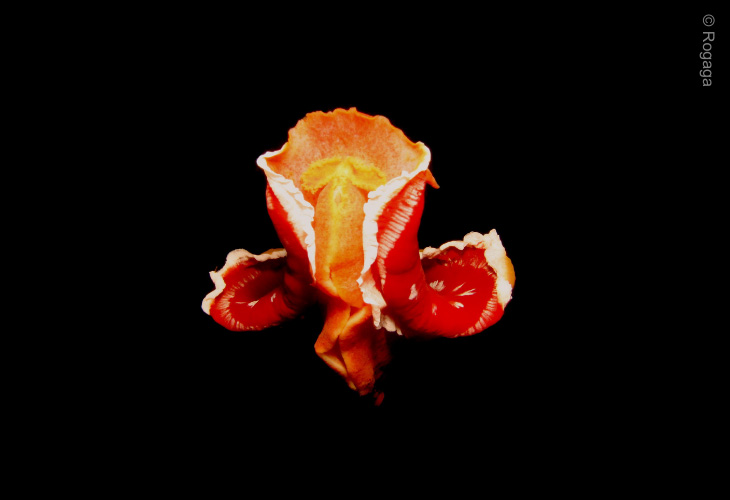
The Ornate Ghost Pipefish (Solenostomus paradoxus) in Bali is one of the most captivating creatures in the macro world. This species belongs to the same family as seahorses and pipefish, and it is famous for its incredible camouflage. Its lace-like body and floating, delicate fins allow it to blend perfectly into feather stars and soft corals. As a result, many divers swim past without even realising it’s there.

Seeing one feels like discovering a secret beneath the waves.

The-Ornate-Ghost-Pipefish

A Master of Disguise

The Ornate Ghost Pipefish survives not through speed or strength, but through camouflage. Its fine filaments copy the texture and colour of its surroundings. Because of this, it can appear red, yellow, brown, or black. Each individual adjusts slightly to match its chosen host.

Most of the time, they hover in pairs. The female is larger, while the male is smaller. They often stay upside down and completely still. This behaviour, combined with their perfect mimicry, makes them one of the ocean’s most effective illusionists.

A-Master-of-Disguise

Behaviour and Habitat

These beautiful creatures are seasonal visitors in Bali. Divers often spot them in Tulamben, Amed, and Padangbai, especially in calm areas filled with soft corals, algae, or crinoids. These environments give them the shelter they need.

Unlike true pipefish, they live freely and appear mainly during breeding periods. This usually happens during the warmer months. The female carries her eggs in a special brood pouch formed from her modified pelvic fins. It’s a unique feature that highlights the species’ fascinating biology.

Because they are temporary residents, finding them always feels rewarding.

Photographing Without Disturbing Them

The Ornate Ghost Pipefish is delicate, so responsible photography is essential. First, divers should maintain neutral buoyancy to avoid damaging the habitat. Second, it is better to avoid strong strobes or repeated flashes. These can disturb the fish. Most importantly, divers should never chase or touch them.

Patience is the key to good macro photography. Many photographers use soft or natural light to highlight the pipefish’s lace-like details. A calm approach creates better photos and helps protect both the fish and its environment.

Photographing-Without-Disturbing-Them

Why They Matter

Although small, Ornate Ghost Pipefish play an important role in Bali’s marine ecosystem. Their presence often shows that a reef is healthy and balanced. They rely on shelter and stability, so they tend to live only in environments with good ecological conditions.

For divers, finding one is always a special moment. It reminds us that the ocean still holds many small mysteries. For conservation efforts, it highlights the value of protecting even the smallest species that contribute to the larger reef community.

Ornate-Ghost-Pipefish-Matter

A Final Glimpse at This Underwater Treasure

The Ornate Ghost Pipefish captures the beauty and fragility of Bali’s underwater world. Its camouflage, behaviour, and seasonal patterns show how much detail lies beneath the surface. When we dive with awareness, we learn to appreciate these creatures not only as rare sightings, but also as delicate masterpieces that deserve protection.

Sometimes, the most extraordinary underwater beauty is the one we almost miss — until we slow down and look a little closer.

By Hafid, AMD-B’s 2025 Divemaster Internship

2025 Internship End of Programme

AquaMarine’s 2025 Divemaster Internship Programme Comes to an End

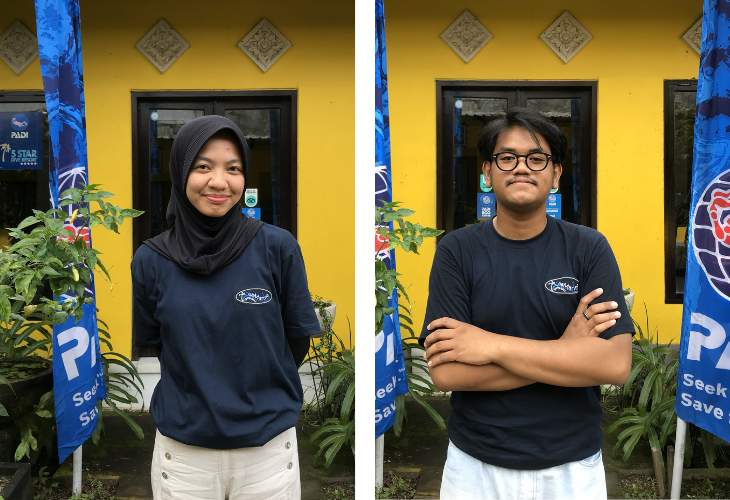
AquaMarine Diving – Bali is pleased to mark the end of our 2025 PADI Divemaster Internship Programme, which finished on 30 November 2025. Since 2011, the programme has offered opportunities to young Indonesians who wish to start a professional career in the dive industry. This year, we proudly worked with two interns: Hafid and Alfari.

2025-Interns-with-Instructors

A Year of Growth and Achievement

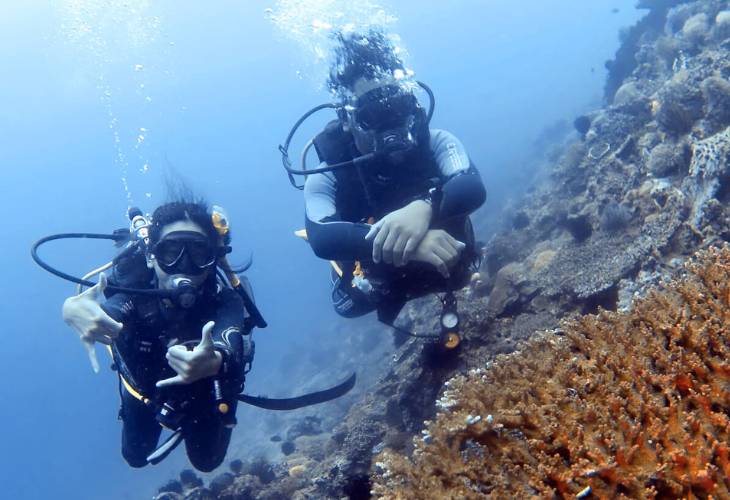
Hafid and Alfari began their training in January. They entered with limited diving experience, yet they progressed quickly. Throughout the year, they completed PADI Open Water, Advanced, Rescue, and finally Divemaster. Each stage brought new skills, and both interns embraced every challenge.

They also learned essential daily tasks. These included guest interaction, equipment care, briefing practice, and safety procedures. As a result, they grew more confident both underwater and on land.

2025-Interns-with-Guests

Supporting Indonesia’s Diving Community

The internship focuses on developing capable, responsible, and environmentally aware dive professionals. Hafid and Alfari showed strong commitment to these values. They demonstrated good teamwork, consistent curiosity, and a positive attitude throughout the programme.

Because of these qualities, we believe they will contribute well to Indonesia’s growing marine tourism sector.

2025-Interns-for-Blue-Project-Activity

Reflections from the Interns

As part of their final review, Hafid and Alfari shared their thoughts:

– “I’m grateful for the support and guidance I received this year.” — Hafid

– “Step by step, I gained confidence and reached Divemaster level.” — Alfari

Acknowledging the Team

We extend sincere appreciation to our Instructors, Guides, and Office Staff. Their steady guidance helped Hafid and Alfari succeed. Their support remains a key part of the programme each year.

2025-Divemaster-Internship-Programme

We congratulate Hafid and Alfari on completing their Divemaster training. We wish them success as they begin the next stage of their diving careers.

Coral Restoration at Mushroom Point

Mushroom Point: A Journey of Coral Restoration and Renewal

Mushroom Point, tucked between Turtleneck and Jepun in Padangbai, is known for its colourful marine life. When parts of the reef began to decline, conservation teams launched a coral restoration project in 2023. Their goal was simple: restore the reef and protect the area for future generations.

Coral-Structure-Deploy-at-Mushroom-Point

Restoring Life With Acropora Corals

The team chose Acropora corals because they grow quickly and adapt well to Bali’s changing waters. They collected healthy donor fragments from nearby colonies and moved them to a small nursery close to Mushroom Point. Here, the corals had time to stabilise and grow.

After several weeks, divers brought the young corals back to the reef. They attached each fragment to eco-friendly structures placed on the seafloor. These bases gave the corals a firm surface to settle, spread, and eventually form new reef branches.

A Thriving Reef by 2025

By 2025, Mushroom Point showed clear signs of recovery. The new Acropora branches created fresh shelter for many marine species. Damselfish, parrotfish, butterflyfish, and juvenile fish returned to the area and made the growing reef their home.

As the coral cover increased, larger species followed. Napoleon wrasse, moray eels, and reef sharks began patrolling the site again. Their return showed that the food chain around Mushroom Point had strengthened and stabilised.

2025-Coral-Monitoring

Benefits for Marine Life and the Community

The project also supported the local community. With more fish around, fishermen noticed healthier catches and more sustainable opportunities. Invertebrates such as crustaceans, sea slugs, and anemones also returned. Each species added new balance and diversity to the recovering reef.

Growing Beyond 2025

Mushroom Point now stands as one of Bali’s most successful coral restoration stories. Conservation teams, dive operators, and the community continue to work together to protect this coastline. As the project expands, Mushroom Point offers hope for a stronger and more resilient marine ecosystem in the years ahead.

Coral-Growth

By Alfari, AMD-B’s 2025 Divemaster Internship