Save! Join a Scheduled Trip or Course; check our “Specials” for limited time offers; subscribe to eNews for discounts, freebies, bonus offers in Bali and Beyond.
Organize diving in Bali and throughout Indonesia for your dive club or group of friends. Our dedicated team of specialists work with travel agencies around the world.
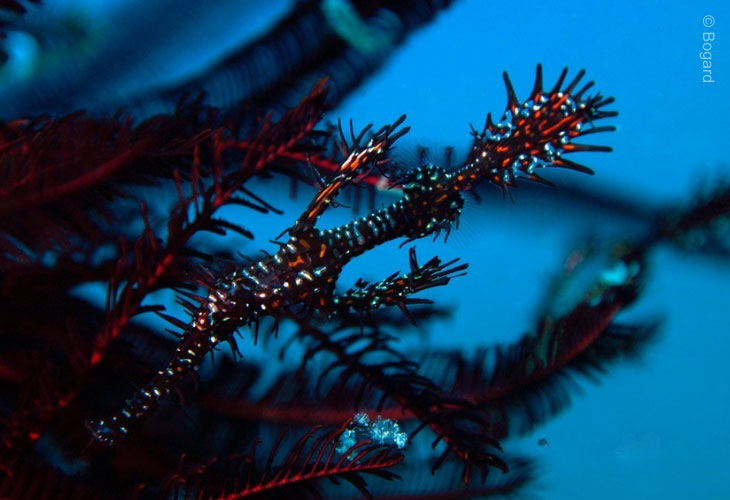
Ornate Ghost Pipefish in Bali: A Master of Underwater Camouflage
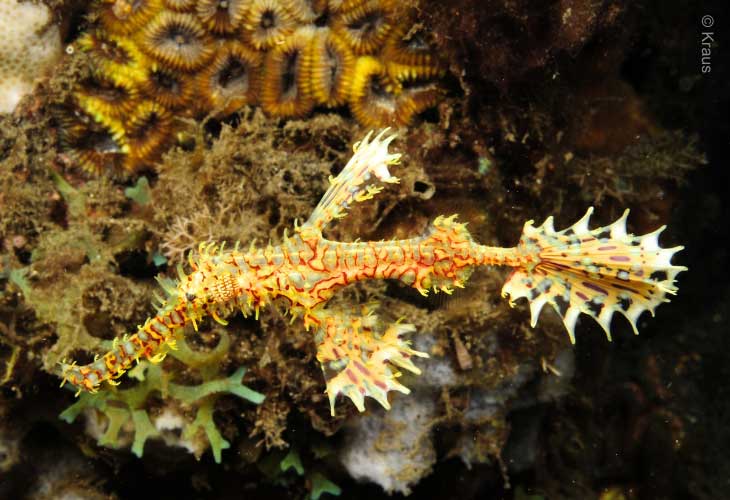
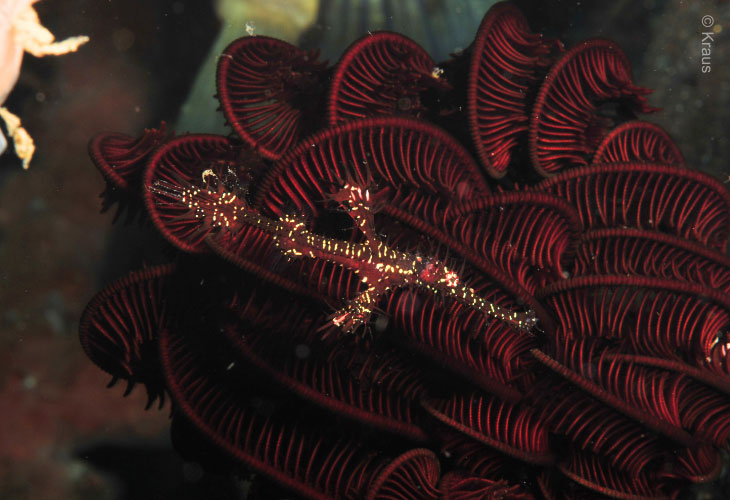
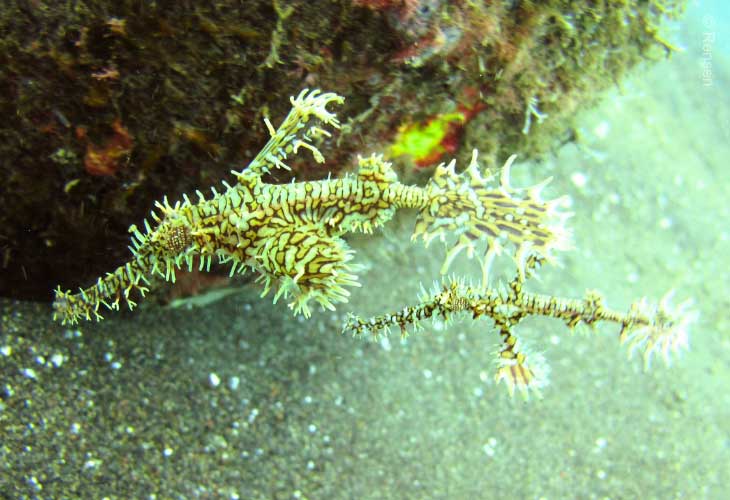
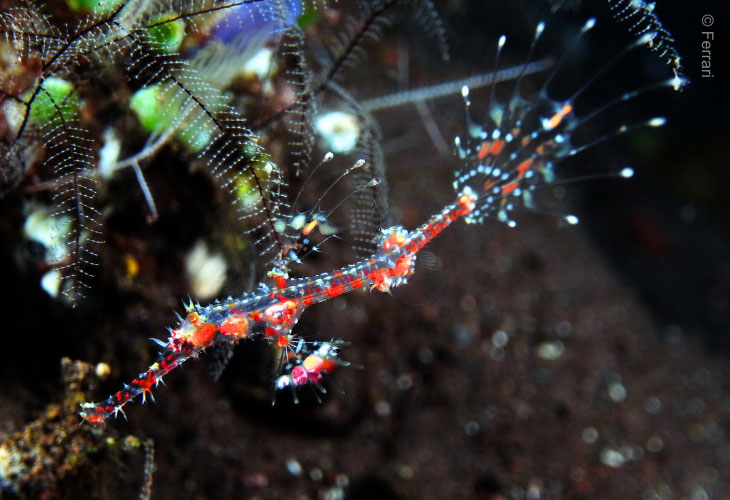
The Ornate Ghost Pipefish (Solenostomus paradoxus) in Bali is one of the most captivating creatures in the macro world. This species belongs to the same family as seahorses and pipefish, and it is famous for its incredible camouflage. Its lace-like body and floating, delicate fins allow it to blend perfectly into feather stars and soft corals. As a result, many divers swim past without even realising it’s there.
Seeing one feels like discovering a secret beneath the waves.
A Master of Disguise
The Ornate Ghost Pipefish survives not through speed or strength, but through camouflage. Its fine filaments copy the texture and colour of its surroundings. Because of this, it can appear red, yellow, brown, or black. Each individual adjusts slightly to match its chosen host.
Most of the time, they hover in pairs. The female is larger, while the male is smaller. They often stay upside down and completely still. This behaviour, combined with their perfect mimicry, makes them one of the ocean’s most effective illusionists.
Behaviour and Habitat
These beautiful creatures are seasonal visitors in Bali. Divers often spot them in Tulamben, Amed, and Padangbai, especially in calm areas filled with soft corals, algae, or crinoids. These environments give them the shelter they need.
Unlike true pipefish, they live freely and appear mainly during breeding periods. This usually happens during the warmer months. The female carries her eggs in a special brood pouch formed from her modified pelvic fins. It’s a unique feature that highlights the species’ fascinating biology.
Because they are temporary residents, finding them always feels rewarding.
Photographing Without Disturbing Them
The Ornate Ghost Pipefish is delicate, so responsible photography is essential. First, divers should maintain neutral buoyancy to avoid damaging the habitat. Second, it is better to avoid strong strobes or repeated flashes. These can disturb the fish. Most importantly, divers should never chase or touch them.
Patience is the key to good macro photography. Many photographers use soft or natural light to highlight the pipefish’s lace-like details. A calm approach creates better photos and helps protect both the fish and its environment.
Why They Matter
Although small, Ornate Ghost Pipefish play an important role in Bali’s marine ecosystem. Their presence often shows that a reef is healthy and balanced. They rely on shelter and stability, so they tend to live only in environments with good ecological conditions.
For divers, finding one is always a special moment. It reminds us that the ocean still holds many small mysteries. For conservation efforts, it highlights the value of protecting even the smallest species that contribute to the larger reef community.
A Final Glimpse at This Underwater Treasure
The Ornate Ghost Pipefish captures the beauty and fragility of Bali’s underwater world. Its camouflage, behaviour, and seasonal patterns show how much detail lies beneath the surface. When we dive with awareness, we learn to appreciate these creatures not only as rare sightings, but also as delicate masterpieces that deserve protection.
Sometimes, the most extraordinary underwater beauty is the one we almost miss — until we slow down and look a little closer.
The Basking Behaviour of Molas: An Essential Part of External Parasite Removal
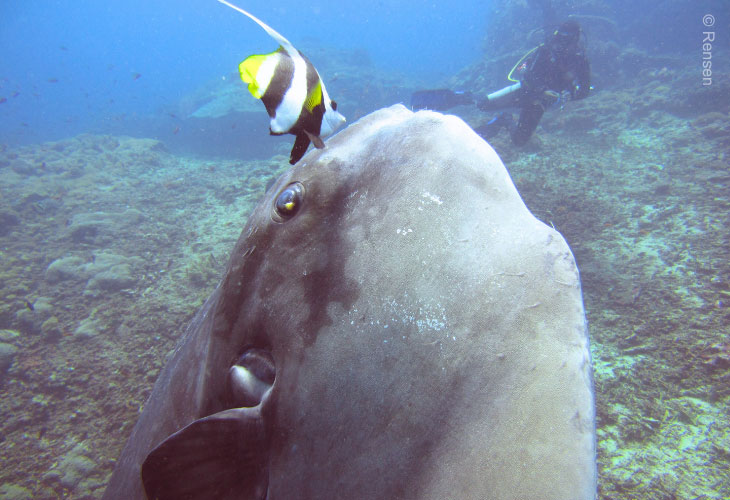
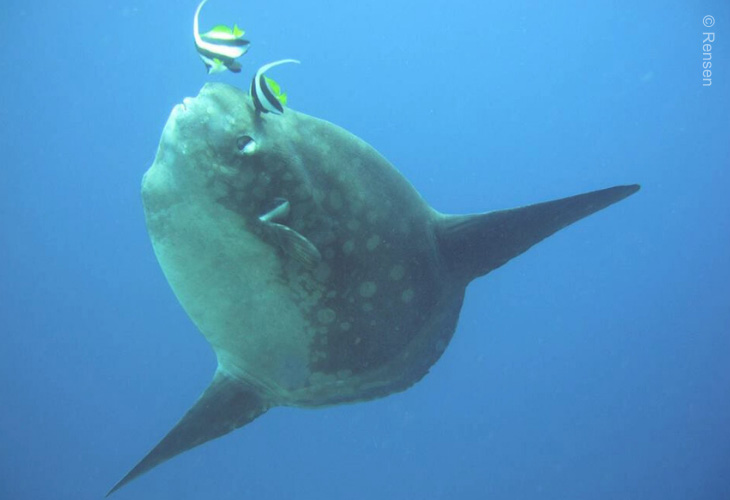
If you’ve ever been diving in Bali and spotted a giant, pancake-shaped fish floating sideways near the surface, you’ve probably encountered a Mola alexandrini — though most divers call it Mola-Mola. These ocean sunfish are truly unique, not only for their odd appearance but also for their fascinating basking behaviour.
Why Do Molas Bask in the Sun?
At first glance, it might seem like Molas are simply relaxing near the surface. In reality, this behaviour is far from lazy — it’s a vital survival strategy. After spending time in the cold, dark depths, basking in shallow water allows them to warm up and, more importantly, visit reef cleaning stations where smaller fish help remove parasites.
The Parasite Problem
Molas are unfortunately prone to carrying a wide variety of parasites, both external and internal. These parasites can cause skin lesions, sores, and infections, making life difficult for the gentle sunfish. Left untreated, they can weaken the fish and leave it more vulnerable to disease.
Cleaning Stations: The Ocean’s Health Clinics
In reef areas, Molas position themselves vertically or horizontally to give cleaner fish — such as bannerfish, butterflyfish, and angelfish — access to their skin and fins. These smaller fish pick off parasites, providing the Mola with much-needed relief while enjoying a nutritious snack in return. It’s a beautiful example of symbiosis in action.
Observing Molas Respectfully
For divers and snorkellers, witnessing a Mola’s basking and cleaning routine is a truly special experience. However, it’s important to observe from a respectful distance. Disturbing them can interrupt their essential cleaning process — something they rely on to stay healthy.
Ready to see these majestic creatures up close? Join our exclusive 2025 Mola Mola Dive Experience and witness the basking behaviour of Molas in Bali’s crystal-clear waters. 🌊 Secure your place today for a front-row encounter with one of the ocean’s most extraordinary species — an adventure you’ll never forget.
Sea Turtles of Bali: Best Places to See Them and How to Protect Them
Bali is a tropical paradise for travellers — but it’s also a sanctuary for some of the world’s most fascinating marine animals: sea turtles. Whether you’re diving along vibrant coral reefs or walking along a quiet beach at sunset, there’s always a chance you’ll encounter one of these ancient, gentle creatures.
In this guide, we’ll cover the species of sea turtles found in Bali, the best places to see sea turtles in Bali, and the inspiring conservation efforts working to protect them.
Species Found in Bali: The Best Places to See Sea Turtles
If you’re wondering where and how to spot a sea turtle in Bali, you’re not alone. These creatures are high on many travellers’ wish lists — and the island delivers. Here are the most common species you’ll find, along with the best places to see them in Bali.
🐢 Green Sea Turtle (Chelonia mydas) Green sea turtles are the most commonly spotted turtles around Bali. They’re often seen feeding on seagrass or resting on the reefs. Calm and curious, they’re a favourite among snorkellers and divers.
Best places to see green sea turtles in Bali: Padang Bai – Especially near the Blue Lagoon. Kuta Reef – Just off the busy tourist beach. Amed – A quiet snorkelling spot with coral gardens.
🐢 Hawksbill Turtle (Eretmochelys imbricata) Hawksbill turtles are beautifully marked with distinctive shells and are crucial for coral reef health, feeding primarily on sponges. They’re slightly more elusive but frequently found in coral-rich waters.
Best places to see hawksbill turtles in Bali: Nusa Lembongan – A favourite diving spot with healthy reefs. Nusa Penida – Offers a great chance to see hawksbills along reef slopes.
🐢 Olive Ridley Turtle (Lepidochelys olivacea) These small but mighty turtles are the rarest of the three seen around Bali. Known for their mass nesting events (barricades), they’re less commonly spotted but still make appearances near key conservation zones.
Best place to see olive ridley turtles in Bali: Serangan Island (Turtle Island) – Visit during nesting season for a rare glimpse.
Protecting Paradise: Sea Turtle Conservation in Bali
While Bali is one of the best places to see sea turtles, these beautiful animals face serious threats. Habitat destruction, plastic pollution, and illegal trade have all taken a toll on sea turtle populations worldwide — and Bali is no exception.
🐣 Turtle Hatcheries and Nesting Programs Conservation centres around Bali are working hard to protect turtle nests and increase hatchling survival rates. If you want to combine travel with purpose, visiting one of these centres is a great place to start.
Top conservation sites: – Turtle Conservation and Education Center (TCEC) – Located on Serangan Island, this centre rehabilitates injured turtles, runs hatcheries, and educates visitors. – Serangan Hatchery – A chance to see turtle eggs, hatchlings, and even join a baby turtle release.
🌍 How You Can Help
Even small actions can make a big impact on sea turtle survival: – Say no to single-use plastics — Especially straws and bags that often end up in the ocean. – Never touch or feed turtles — Observe respectfully. – Choose eco-certified tour operators that follow ethical wildlife practices. – Don’t buy products made from turtle shell or eggs. – Consider volunteering or donating to trusted organizations like WWF Indonesia or Bali Sea Turtle Society.
Explore Responsibly and Make a Difference
Bali truly is one of the best places to see sea turtles — whether you’re floating above coral gardens in Nusa Penida, diving into the deep blue off Padang Bai, or releasing hatchlings into the ocean on Serangan Island.
But these encounters come with responsibility. By choosing eco-conscious experiences and supporting local conservation efforts, you help protect these ancient mariners and ensure future travellers can enjoy the same unforgettable moments.
So grab your mask, fins, and a deep respect for the ocean — your sea turtle adventure in Bali awaits.