


Diving Tips: How to Improve Your Air Consumption

Improve Air Consumption

Improving your air consumption is one of the most valuable skills any diver can develop. Not only does it allow for longer bottom times, but it also increases your safety, reduces stress, and helps you become a more relaxed, efficient diver.

While some aspects of air consumption are influenced by physiology, much of it comes down to technique, awareness, and regular practice.

Let’s dive into practical ways you can stretch your tank and enjoy your underwater adventures more fully.

Improve-Air-Consumption

Master Your Buoyancy

Struggling to maintain buoyancy wastes both air and energy. If you are constantly inflating and deflating your BCD or finning to stay in position, you’re using more oxygen than necessary. Take time to perfect your neutral buoyancy. Practice hovering with slow, minimal movements. This skill reduces drag, conserves energy, and helps your breathing rate naturally slow down.

Consider taking the PADI Peak Performance Buoyancy Speciality for structured training and feedback.

Slow Down Your Movements

Calm, slow movements are the key to conserving air. Avoid rapid finning or sudden arm motions. Streamlined, deliberate movements reduce effort and help you remain calm—keeping your breathing slower and more controlled.

Think like a sea turtle: graceful, smooth, and relaxed.

Focus on Breathing Technique

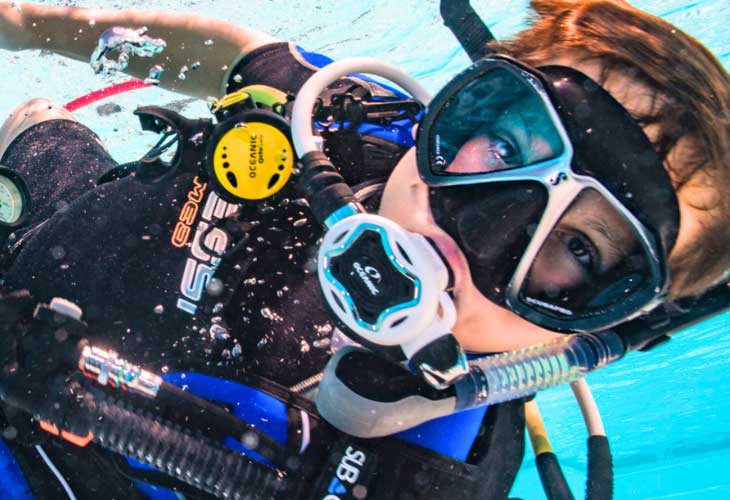
Breathing efficiently underwater is very different from breathing on land. Use the following tips:
– Take deep, slow breaths from your diaphragm, not your chest. Pause briefly after inhaling and exhaling—this creates a natural rhythm.
– Avoid shallow or rapid breathing, which can increase carbon dioxide build-up and trigger anxiety. With time, this controlled breathing becomes second nature.

Focus-on-Breathing-Technique

Streamline Your Gear

Bulky or dangling equipment increases drag and resistance. This forces you to work harder and breathe more. Make sure hoses, slates, and accessories are clipped close to your body. The more streamlined your setup, the less effort you will need to move—translating into better air efficiency.

Stay Warm and Comfortable

Being cold underwater causes your body to burn more energy to maintain its core temperature, increasing your air consumption. Wear an appropriate exposure suit and keep your gear well-fitted. Even mild discomfort, like a leaky mask or too-tight straps, can cause unnecessary stress and lead to faster breathing.

Dive More

As with any skill, practice improves performance. The more you dive, the more your body adapts to the environment, and the better your air consumption will get. Regular diving builds muscle memory, breathing control, and confidence—all of which contribute to more efficient air use.

Master-Your-Buoyancy

Improving your air consumption is not about holding your breath or pushing limits—it’s about being calm, aware, and efficient in every moment of your dive. Small improvements add up over time, and with practice, you’ll find yourself staying down longer and enjoying every dive more fully. If you want to track your progress, log your SAC (Surface Air Consumption) rate after each dive and notice the improvements. And remember: the most important breath is the one you take slowly and mindfully.

PADI Peak Performance Buoyancy Specialty Course

Click below for more PADI Dive Courses Information:

By Hafid, AMD-B’s 2025 Divemaster Intern
PADI Women’s Dive Day 2025

Celebrating Women in Diving

PADI Women’s Dive Day is not just a day—it is a global celebration of the ocean and the women who dive into it with passion, purpose, and perseverance. Held every July, this initiative unites thousands of divers around the world to celebrate diversity and create a more inclusive dive community.

PADI Women’s Dive Day has grown into one of the largest global days of diving. But more than that, it has become a platform for environmental action, connection, and empowerment.

Let’s explore why this day matters, and how you can be a part of it.

Dive with Purpose

Women in diving are as diverse as the reefs we explore—spanning all ages, backgrounds, and experience levels. PADI Women’s Dive Day fosters a sense of belonging in a sport that historically had more male representation. Whether you are diving in Bali, Florida, or the Red Sea, this event is about making friends, sharing stories, and supporting each other underwater and on land.

It is also a space for mentorship. Seasoned divers can inspire beginners. Dive professionals can share their journeys. And together, we build a stronger, more supportive dive community.

PADI-Women-Dive-Day

Highlight Women’s Achievements

From underwater photographers to marine scientists, dive instructors to conservationists, women continue to play a powerful role in the dive industry. PADI Women’s Dive Day celebrates their achievements and raises awareness of the challenges women may still face in the diving world.

Many events include talks or exhibitions featuring female divers who are breaking boundaries and leading marine protection efforts.

How You Can Join

Anyone can take part in PADI Women’s Dive Day. You do not need to be a woman, or even a certified diver yet. All that’s required is a love for the ocean and a willingness to dive in—literally or figuratively.

Find an event near you through your local dive centre or the PADI website. Or, create your own celebration: gather your dive buddies, plan a dive, share your story online, or even just commit to taking care of your local coastline.

Women-in-Diving

Every Dive Counts

PADI Women’s Dive Day is more than a calendar date—it’s a movement. A movement to elevate voices, break barriers, and build a more inclusive underwater world. Whether you’re diving deep or just starting your journey, your presence matters.

Join the wave. Celebrate with us. And dive into a brighter, more connected future.

By Alfari, AMD-B’s 2025 Divemaster Intern

Scuba Skill: Neutral Buoyancy

Neutral Buoyancy

Neutral buoyancy is often considered the ‘holy grail’ of scuba diving skills. It is the ability to hover effortlessly in the water without sinking to the bottom or floating to the surface. Not only does mastering neutral buoyancy make your dives smoother and more enjoyable, but it also helps protect the underwater environment, conserve your energy, and improve your air consumption.

Let’s dive into what it takes to achieve this essential skill and how to fine-tune it underwater.

Check Weight Setup

Achieving neutral buoyancy starts before you even enter the water. Begin by checking your weight setup—wearing too much weight makes it harder to stay neutrally buoyant, while too little will keep you floating upward. Perform a buoyancy check at the surface: with an empty BCD and a normal breath, you should float at eye level.

Once underwater, use your lungs and breath control as your main adjustment tool. Small, slow breaths help you rise and fall gently. Use your BCD only for major adjustments during descent or ascent—not for constant tweaking.

Practice hovering in the water column with minimal movement. It takes time, but the more you practice, the more natural it becomes.

Neutral-Buoyancy

Streamline Your Gear

Loose or bulky equipment can throw off your balance and increase drag, making it harder to stay neutrally buoyant. Keep hoses tucked in, clip accessories close to your body, and avoid unnecessary gear that adds drag.

A streamlined setup not only helps with buoyancy but also reduces the chance of damaging coral or disturbing marine life when you pass by close structures like walls or wrecks.

Trimming

Trimming refers to how your body is positioned in the water. Ideally, you should be horizontal and flat, like you are lying on a table. This posture helps you move efficiently with less effort and gives you better control.

Uneven trim—like having your feet lower than your head—can cause you to struggle with staying level or result in upward/downward movement while finning. Adjust your weight distribution, tank position, or gear setup to find your ideal trim.

Practice Hovering

Find a calm spot on your dive and try hovering a few feet off the bottom without moving your fins or arms. Use breath control to stay in place. This drill builds confidence and control over your position in the water.

Try hovering in different positions: upright, horizontal, or even upside down to gain better awareness of your buoyancy and body position.

Practice-Hovering

Fine-Tune on Every Dive

Neutral buoyancy is not a one-time skill—it requires ongoing adjustment depending on your depth, exposure suit, tank weight, and dive conditions. You will need to re-tune throughout your dive, especially as your tank gets lighter and you become more positively buoyant.

Be mindful of small changes and keep practising. The more dives you do, the more your body will instinctively adjust to stay balanced.

PADI Peak Performance Buoyancy Specialty

Neutral buoyancy is what separates good divers from great ones. It takes patience, awareness, and regular practice—but the rewards are worth it. From effortless gliding through coral gardens to longer bottom times and better air use, mastering this skill opens up a whole new level of diving enjoyment.

If you want structured training, consider taking a Peak Performance Buoyancy speciality course. The course provide focused practice, professional guidance, and feedback to help you improve quickly and confidently.

AquaMarine Diving – Bali’s PADI Peak Performance Buoyancy Specialty (PPB) is the ideal course for divers wishing to perfect their skills in balance, movement and breathing underwater.

Buoyancy-Speciality-Course

PADI Peak Performance Buoyancy Specialty Course

Click below for more PADI Dive Courses Information:

By Hafid, AMD-B’s 2025 Divemaster Intern