


Volcanic Eruptions and Their Impact on Coral Reefs

Volcanic Eruptions and Their Impact on Coral Reefs

by Fahmi, AMD-B’s 2024 Divemaster Intern

Volcanic eruptions can have significant effects on coral reefs, both negative and positive. When a volcano erupts, ash and lava can cover coral reefs, killing the corals and the marine life they support. But volcanic activity also creates new surfaces for baby corals to settle on and grow, leading to the formation of new reefs. The nutrients from volcanic ash can sometimes boost the growth of corals and other marine life.

Volcanic-Eruptions

Temperature changes from volcanic eruptions can also impact coral reefs. The heat from lava can raise water temperatures, causing stress and bleaching in corals. On the other hand, ash clouds can sometimes cool the ocean surface for a short time, which might help reduce bleaching. The overall impact on coral health depends on the duration and magnitude of the temperature changes.

Volcanic-Eruptions-in-Bali

Volcanic Eruptions in Bali

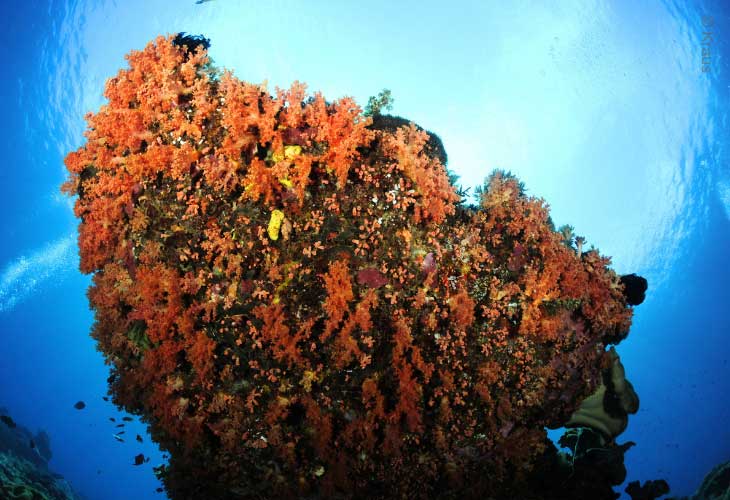
A good example is the USAT Liberty shipwreck in Tulamben, Bali. The ship was torpedoed then beached during World War II and later moved to its current spot by the eruption of Mount Agung in 1963. Over time, the wreck has become covered with colourful corals and is now home to many marine creatures, creating a unique underwater habitat. This shows how volcanic events, despite their initial damage, can eventually help create new and thriving coral ecosystems. Today, the USAT Liberty shipwreck is a popular dive site, attracting divers from all over the world.

USAT Liberty Shipwreck Diving Trip

Click below for more Bali Diving Information:

Bali’s Temple Tanah Lot

Tanah Lot Temple: A Majestic Coastal Sanctuary

by Hafid, AMD-B’s 2025 Divemaster Intern

Nestled on the southwestern coast of Bali, Tanah Lot is one of the island’s most iconic and revered sea temples. Known for its stunning beauty and cultural significance, this temple is a must-visit for both spiritual seekers and travellers looking to experience the magic of Bali’s natural landscapes. The name “Tanah Lot” translates to “Land in the Sea,” which perfectly describes the temple’s unique location—perched atop a rocky outcrop, surrounded by the crashing waves of the Indian Ocean.

Tanah-Lot-Temple

A Spiritual Haven

Tanah Lot is dedicated to the Balinese sea gods and serves as a spiritual centre for locals who come to pray and offer sacrifices to the gods for safe voyages and bountiful harvests. According to Balinese mythology, the temple was built in the 15th century by the priest Nirartha, who sought a place to meditate while travelling along the island’s coast. Enchanted by the stunning view, he is said to have built the temple on the rock as a tribute to the gods.

The temple itself is a serene place of worship. Though visitors are not permitted to enter the temple grounds, they can admire the intricate carvings and architecture from a distance. For those interested in the temple’s spiritual significance, Tanah Lot offers a glimpse into the deep connection the Balinese people have with nature and the sea.

Tanah-Lot-Temple-Scenery

A Scenic Wonder

What makes Tanah Lot truly remarkable is its picturesque setting. The temple is surrounded by lush tropical gardens, and the backdrop of the crashing waves adds to its mystique. The best time to visit is during sunset when the sky turns into a palette of oranges, pinks, and purples, casting a magical glow over the temple. It is one of the most photographed sites in Bali, and the view from the temple is nothing short of breathtaking.

Visitors can also explore the surrounding area, where small stalls and shops sell traditional Balinese crafts and souvenirs. Local fishermen often work nearby, adding a touch of authenticity to the area. The tides can make the temple either accessible or isolated, depending on the time of day. At low tide, visitors can walk up to the temple, while at high tide, it becomes a dramatic silhouette against the waves.

Sunset-from-Tanah-Lot-Temple

Cultural and Environmental Preservation

The Balinese people continue to preserve Tanah Lot not only as a sacred site but also as a symbol of their rich cultural heritage. The temple is part of a larger effort to protect Bali’s religious traditions, while its surrounding environment is maintained to ensure the temple’s stunning views remain unspoiled.

In conclusion, Tanah Lot stands as a symbol of Bali’s natural beauty, spiritual depth, and cultural heritage. Whether you’re drawn by its religious significance or simply its scenic beauty, a visit to Tanah Lot is an unforgettable experience that captures the essence of Bali’s mystical charm.

Bali Topside Activities

Click below for more Bali Information:

Dive Site: 120m USAT Liberty Shipwreck

USAT Liberty Shipwreck: Possibly the World’s Easiest Wreck Dive

The Liberty was torpedoed by the Japanese off the coast of Lombok. Although attempts were made to tow the ship to north Bali, it was taking on too much water and therefore was semi-beached at Tulamben. During the last eruption of Mt Agung, Bali’s highest and most sacred mountain, the earth tremors roched the boat down the beach and into the sea.

The USAT Liberty Shipwreck lies a mere 30m offshore, and almost parallel to the beach, making it suitable for all levels of certification and experience. The shallowest part of the wreck where it touches the sand slope is at 5-10m while average depth along the middle is 16-20m. The lower edge of the wreck, the furthest down the slope, is 20-28m at high tide.

The wreck is pretty broken up, no penetration possible. But you can still see the guns, toilets, boilers, anchor chain, etc. A truly lovely dive site!

USAT-Liberty-Shipwreck

USAT Liberty Shipwreck for Underwater Photographers

The USAT Liberty Shipwreck is very popular with underwater photographers/videographers as it is totally encrusted in anemones, gorgonian fans, hard and soft corals.

In addition the black sand provides an excellent colour contrast for the incredible variety of marine life, which includes a school of 100s of Big-eyed trevallys (length 30cm/12in) and over 400 other species of fish.

Diving on, in and around the Liberty Shipwreck, you are quite likely to see a high percentage of the marine life shown in any Indo-Pacific Reef Guide book. That is what keeps divers coming back time and time again.

Each area of the Liberty Shipwreck offers something different to see!

USAT-Liberty-with-Anemones

Night and Early Morning Wreck Dives

Night diving on the Wreck is always great but particularly so during the full moon. You may see Spanish dancers and the school of huge Bumphead parrotfish in their sleeping cocoons. Also Flashlight fish, Bobtail squid, even phosphorescence, and the basket stars! – where else in the world could you make such an easy and varied Night Dive?

If you dive early enough, 06-07:00, you may see the school of Bumphead parrotfish heading out for breakfast. This is also the most likely time of day to see Mola-Mola, Manta rays, turtles and any Whalesharks passing through. In our opinion, it’s the best time of day to dive the wreck.

USAT-Liberty-Wreck-Dives