Save! Join a Scheduled Trip or Course; check our “Specials” for limited time offers; subscribe to eNews for discounts, freebies, bonus offers in Bali and Beyond.
Organize diving in Bali and throughout Indonesia for your dive club or group of friends. Our dedicated team of specialists work with travel agencies around the world.
Tulamben Area offer a variety of conditions and types of diving. There are, in fact, quite a number of dive sites in the Tulamben Area (ie: outside Tulamben Bay). Most are mainly to the south east, but here we are only detailing the better-known sites. Because these sites are outside Tulamben Bay, they are more exposed and can be affected by currents however they are suitable for all levels beyond beginner.
Some of these Tulamben Area dive sites are popular areas for macro (muck) diving revealing many small critters in easy-to-photograph environments. The best known is Seraya Slope.
Tulamben Area Dive Sites
These Tulamben Area dive sites include Seraya for muck-diving and Batu Kelebit, Palung-Palung, Kubu, and Emerald for other marinelife including reef sharks, Napoleon wrasse and Bumphead parrotfish.
Seraya Slope
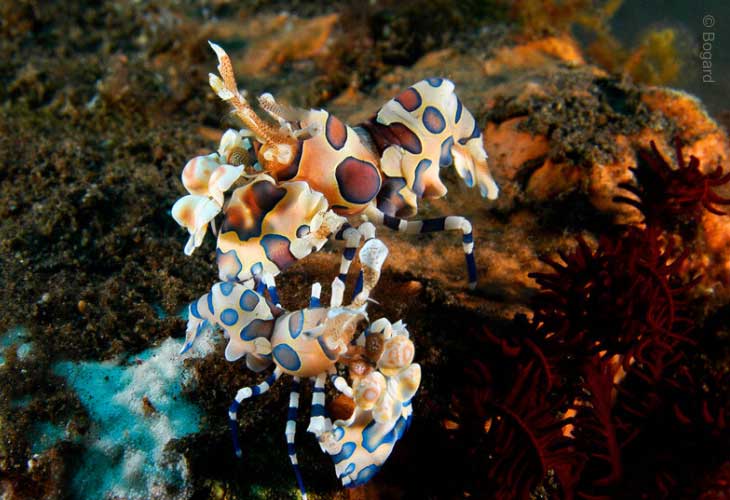
As well as the main, central site called ‘Seraya’, named for a nearby resort, this small area also encompasses various individual muck sites. As with all the Tulamben Area dive sites, these muck diving sites have a black sand bottom and little coral growth. Seraya Slope is one of our favourite muck sites for interesting discoveries. The macro life here includes a wide range of shrimps, pipefish, crabs, nudibranchs, and other fabulous creatures.
Kubu
Muck divers will find many nudis and other macro creatures dotted around the black sand slope, together with eels, cuttlefish, Leaf scorpionfish and more.
Two small walls (approx 25m depth with viz of 20m) offer gentle drift-diving past numerous sea fans (with Pygmy seahorses) and a variety of sponges, as well as hard and soft corals. Kubu has the highest concentrations of lionfish and Blue-spotted rays in the Tulamben area.
Palung-palung
Palung-palung is covered in colourful soft corals and alive with butterflyfish, sea fans, swaying Garden eels, hunting day octopus, and large schools of fusiliers. Also, you will quite often see some of Tulamben’s school of huge Bumphead parrotfish munching on the coral and White-tip and Black-tip reef sharks looking for their next meal.
Batu Kelebit
An unusual and exciting site just outside Tulamben Bay that provides opportunities to see pelagics as well as reef life different from that inside the Bay.
Batu Kelebit is basically two large rocks that lie just offshore. As you follow the sloping reef deeper, the dive site becomes more dramatic. You’ll see three steep ridges encrusted with a wonderful diversity of hard and soft corals, fire and table corals, many beautiful sea fans, and sponges.
Emerald
There is a sunken car and some other pieces of artificial reef on the sandy slope – which itself is a natural home to cuttlefish, gobies, Decorated dartfish, Helmut gurnard and nudis. There are some areas of Garden eels too.
Around 20-30m depth, the reef becomes richer with a large number of sponges, including Barrel sponges, and is a good place to see reef sharks. Both Thresher sharks and Eagle rays are (occasionally) seen here. There is a small drop-off with Elephant ear sponges and hard corals, and some large, semi-resident Napoleon wrasse.
AquaMarine Diving – Bali could easily put together a 7+ Day Tulamben Bay and Tulamben Area Dive Sites Safari with 3-4dives/day at a different site each day.
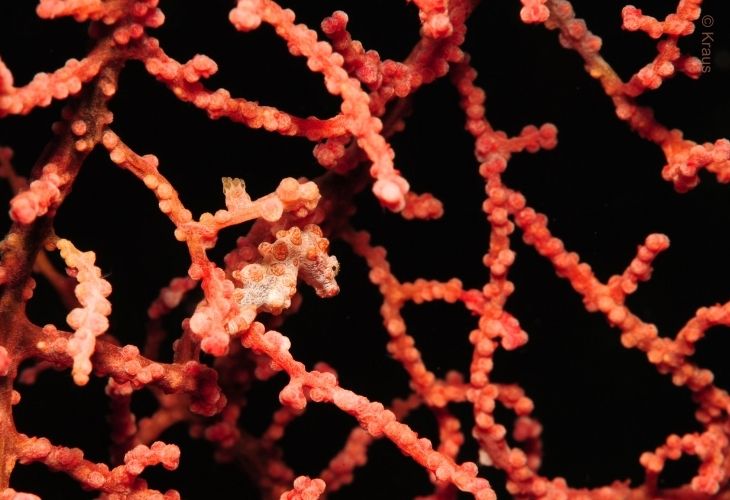
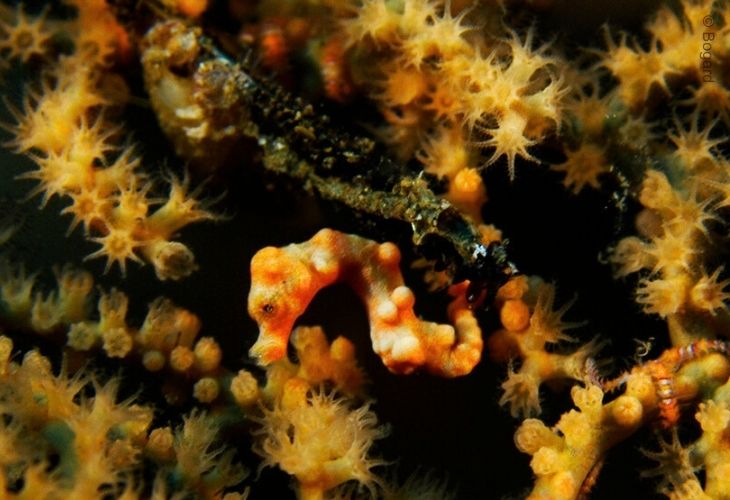
Pygmy seahorses are among the most fascinating and elusive creatures of the underwater world. With their tiny size and remarkable camouflage, they have intrigued marine enthusiasts and scientists alike. Found primarily in the coral reefs of the Indo-Pacific, these seahorses have adapted to blend seamlessly into their surroundings, making them difficult to spot even by the most experienced divers. Below is a detailed exploration of popular species of pygmy seahorses and their distinctive features.
Hippocampus bargibanti
Hippocampus bargibanti is one of the most well-known pygmy seahorse species, first discovered in the waters of Indonesia. It has a minuscule size, measuring only about 2.5cm in length. This species is frequently found hiding within red or orange sponges, which provide perfect camouflage. Its unique ability to blend into its habitat makes it incredibly difficult to spot, despite its relatively abundant population.
This species was discovered in the waters around Halmahera Island in Indonesia. It is tiny, measuring around 2cm, and often resides in brightly coloured sponges. H. satomiae is known for its body texture and colouration, which closely resemble the sponges they inhabit, providing excellent protection from predators.
Hippocampus denise
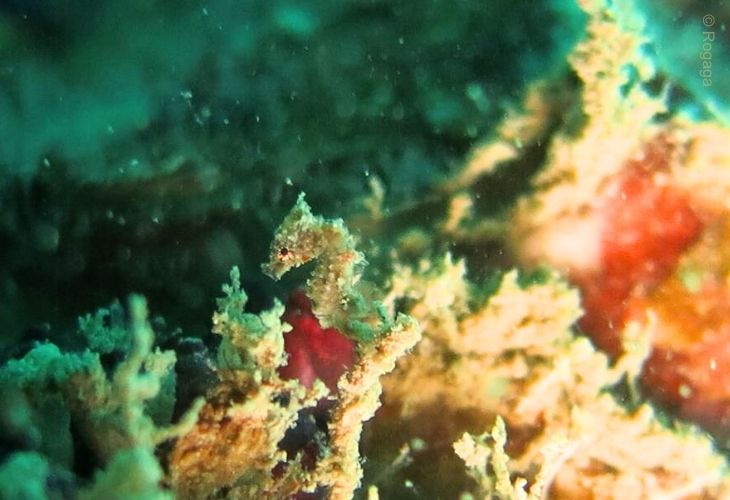
Known as Denise’s Pygmy Seahorse, this species is even smaller than H. bargibanti, with a length of about 1.5cm. They are typically found in smaller sponges or coral reefs, often with vibrant colours like pink or orange. Found at depths between 10 and 50 meters, they have a slim, textured body, giving them a distinct appearance compared to other seahorses.
Denise’s Pygmy Seahorse (Hippocampus denise)
Hippocampus colemani
Found in the waters around Australia and Papua New Guinea, H. colemani is a slightly larger and fatter pygmy seahorse species. With lighter colours, they often hide in contrastively coloured sponges or corals. These seahorses prefer deeper waters, usually between 30 to 40 meters in depth.
Hippocampus pontohi
One of the smallest pygmy seahorses, H. pontohi has a body length of just 1cm. They are typically found hiding in brightly coloured sponges, particularly pink ones. Their exceptional camouflage makes them incredibly difficult to spot, even in areas frequented by divers.
Also, Hippocampus severnsi known as Severn’s seahorse is a small, rare species found in the Indo-Pacific region. Known for its distinctive appearance, it typically inhabits shallow coral reefs and seagrass beds. Like other seahorses, it feeds on small invertebrates. The H. severnsi was considered a separate species but is now recognised as a variation of the Pontohi.
Severn’s Pygmy Seahorse (Hippocampus severnsi)
The Importance of Pygmy Seahorses
Pygmy seahorses are fascinating not only for their size and camouflage but also for their role in coral reef health. All species rely on coral reefs and the shelter provided by sponges and other marine structures. Their small size and sensitivity to environmental changes make them important indicators of reef conditions.
As pygmy seahorses depend on healthy, undisturbed reefs, their presence or absence signals the reef’s overall health. With coral reefs threatened by acidification, habitat destruction, and climate change, protecting pygmy seahorse habitats is crucial for maintaining marine biodiversity. In short, pygmy seahorses are not only marvels of nature but also vital to the conservation of coral reefs and the broader marine ecosystem.
Diving in Bali: Reasons Why Bali’s Diving is So Great
by Hafid, AMD-B’s 2025 Divemaster Intern
Bali is a top diving destination known for its rich marine biodiversity. Located in the Coral Triangle, it’s home to over 600 species of coral and 2,000 species of fishes. Bali’s dive sites are also famous for macro diving, where you can spot rare creatures like pygmy seahorses, seadragons, and frogfish. The volcanic waters surrounding the island provide nutrients that support thriving, healthy ecosystems. Accessible sites like Tulamben and Menjangan Island make Bali a paradise for underwater enthusiasts seeking diverse marine life.
Suitable for All Levels
Bali giving options to divers from all experience levels, making it an ideal destination for beginners and seasoned divers alike.
Beginners: For novice divers, Bali offers calm and shallow dive sites, such as Padangbai and Tulamben, where vibrant coral reefs and colourful fish are easy to find. These sites provide a relaxed atmosphere to help build confidence and dive skills.
Intermediate Divers: Sites like Candidasa and Nusa Penida are perfect for those with more experience. These locations offer deeper dives, shipwrecks, and exciting night dives. The conditions here are more challenging, offering the chance to explore more advanced underwater environments.
Advanced Divers: Bali also features specialized dive sites, like muck diving and drift diving, for experienced divers. The famous USAT Liberty wreck in Tulamben and thrilling night dives provide unique experiences, showcasing Bali’s rich underwater world in an entirely different light.
Easy Access to Dive Sites
Bali offers convenient access to its incredible dive sites, whether you prefer shore diving or boat diving.
Shore Diving: For a more straightforward dive experience, sites like Amed, Tulamben, and Secret Bay are ideal. Divers can simply walk into the water and immediately enjoy vibrant coral reefs and diverse marine life.
Boat Diving: For more remote dive sites, boat dives are a great option. Padangbai is just a short boat ride from multiple dive sites, while Nusa Penida offers unforgettable dives, like Manta Point, where you can swim with majestic manta rays, and Crystal Bay and Blue Corner, where the elusive Mola-Mola (Ocean Sunfish) can be spotted.
Bali’s Gentle Giants: Mantas and Molas
Bali is renowned for sightings of Manta Rays and Mola-Mola. Nusa Penida, especially between April and October, offers prime opportunities to see these graceful manta rays. Mola-Mola can be found in Blue Corner, Crystal Bay, and Vertigo Point from July to October.