

Sea Turtles of Bali

Sea Turtles of Bali: Best Places to See Them and How to Protect Them

Bali is a tropical paradise for travellers — but it’s also a sanctuary for some of the world’s most fascinating marine animals: sea turtles. Whether you’re diving along vibrant coral reefs or walking along a quiet beach at sunset, there’s always a chance you’ll encounter one of these ancient, gentle creatures.

In this guide, we’ll cover the species of sea turtles found in Bali, the best places to see sea turtles in Bali, and the inspiring conservation efforts working to protect them.

Species Found in Bali: The Best Places to See Sea Turtles

If you’re wondering where and how to spot a sea turtle in Bali, you’re not alone. These creatures are high on many travellers’ wish lists — and the island delivers. Here are the most common species you’ll find, along with the best places to see them in Bali.

🐢 Green Sea Turtle (Chelonia mydas)
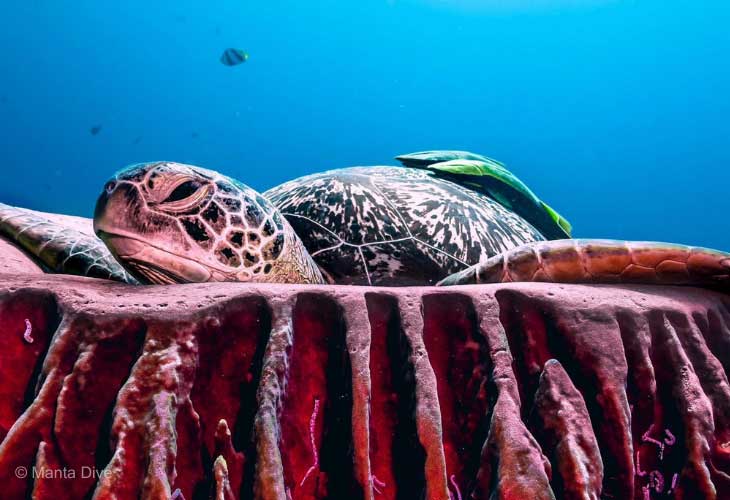
Green sea turtles are the most commonly spotted turtles around Bali. They’re often seen feeding on seagrass or resting on the reefs. Calm and curious, they’re a favourite among snorkellers and divers.

Best places to see green sea turtles in Bali:
Padang Bai – Especially near the Blue Lagoon.
Kuta Reef – Just off the busy tourist beach.
Amed – A quiet snorkelling spot with coral gardens.

🐢 Hawksbill Turtle (Eretmochelys imbricata)
Hawksbill turtles are beautifully marked with distinctive shells and are crucial for coral reef health, feeding primarily on sponges. They’re slightly more elusive but frequently found in coral-rich waters.

Best places to see hawksbill turtles in Bali:
Nusa Lembongan – A favourite diving spot with healthy reefs.
Nusa Penida – Offers a great chance to see hawksbills along reef slopes.

🐢 Olive Ridley Turtle (Lepidochelys olivacea)
These small but mighty turtles are the rarest of the three seen around Bali. Known for their mass nesting events (barricades), they’re less commonly spotted but still make appearances near key conservation zones.

Best place to see olive ridley turtles in Bali:
Serangan Island (Turtle Island) – Visit during nesting season for a rare glimpse.

Sea Turtles of Bali

Protecting Paradise: Sea Turtle Conservation in Bali

While Bali is one of the best places to see sea turtles, these beautiful animals face serious threats. Habitat destruction, plastic pollution, and illegal trade have all taken a toll on sea turtle populations worldwide — and Bali is no exception.

Fortunately, local communities and conservation groups are stepping up.

🐣 Turtle Hatcheries and Nesting Programs
Conservation centres around Bali are working hard to protect turtle nests and increase hatchling survival rates. If you want to combine travel with purpose, visiting one of these centres is a great place to start.

Top conservation sites:
Turtle Conservation and Education Center (TCEC) – Located on Serangan Island, this centre rehabilitates injured turtles, runs hatcheries, and educates visitors.
Serangan Hatchery – A chance to see turtle eggs, hatchlings, and even join a baby turtle release.

🌍 How You Can Help

Even small actions can make a big impact on sea turtle survival:
– Say no to single-use plastics — Especially straws and bags that often end up in the ocean.
Never touch or feed turtles — Observe respectfully.
– Choose eco-certified tour operators that follow ethical wildlife practices.
– Don’t buy products made from turtle shell or eggs.
– Consider volunteering or donating to trusted organizations like WWF Indonesia or Bali Sea Turtle Society.

The-Best-Places-to-See-Sea-Turtles

Explore Responsibly and Make a Difference

Bali truly is one of the best places to see sea turtles — whether you’re floating above coral gardens in Nusa Penida, diving into the deep blue off Padang Bai, or releasing hatchlings into the ocean on Serangan Island.

But these encounters come with responsibility. By choosing eco-conscious experiences and supporting local conservation efforts, you help protect these ancient mariners and ensure future travellers can enjoy the same unforgettable moments.

So grab your mask, fins, and a deep respect for the ocean — your sea turtle adventure in Bali awaits.

By Hafid, AMD-B’s 2025 Divemaster Intern

Ambon Island

Ambon

Ambon, offers one among many remotest dive sites in Indonesian Archipelago. In history, this place is famously known as the heart of spice trade hence the nickname Spice Island.

Nowadays, Ambon is more familiar as a white sandy beach with pristine corals and abundant marine lifes. If you are a muck diving enthusiast, this destination is worth to visit. Although, Ambon’s underwater world are not limited only to muck diving. For a more variety of dive sites, Banda sea is usually combined and be explored together through liveaboard trips.

Ambon-Diving

Dive Sites

Taking a closer look on what Ambon has to offer in terms of its speciality, Twilight Zone is one of the most popular. It is a home to ghostpipefish, rhinophias, frogfish, crustaceans, seahorses, octopus, and of course nudibranchs. Other dive site like Middle Point is also worth a shot being a home to many more amazing species including the rare Halimeda Ghostpipefish.

Further to the southern part of the island, Ambon presents great wall/reef diving. The underwater archway at Pintu Kota is a home to gorgonians and sea fans. If you wish to squeeze in a bit variety in your muck diving schedule, you could visit the Duke of Sparta Wreck close to Ambon harbour.

Ambon Diving Season

Ambon is hot and humid like many other tropical place in Indonesia. In general the dry season where less rain is expected lies within mid-September to April. This is when the visibility tends to be great.

If you are asking for the best time, we would recommend October to December. Avoid visiting in June-August because this is where the heavy rainfall and strong winds affect your diving agenda. Since the visibility and condition is extremely bad during this time, many dive resorts are closed for maintenance so make sure you check with your Dive Travel Consultant at Tours@AquaMarineDiving.com for the best arrangement possible.

Twilight-Zone-Dive-Sites

How to reach Banda

As most of international flights landed in Jakarta or Bali, you can fly to Ambon from either one. Some flights to Ambon from Jakarta usually take a stop in Manado. If you are looking for say a month muck diving safari, you could do approximately a week each in BaliLembeh – Ambon. Just a thought 🙂

Boasting its underwater world, Ambon has pretty much less to do inland but it is worth to mention here that perhaps you would like to get a few pictures of the town to complete your visit. Natsepa Beach is within a short ride from the city – take a stop along the roadside and have a taste of the sweet and tangy local Rujak (fruits with peanut sauce). You can also visit the traditional market for fresh vegetables and fruits, maybe do some spice trade? 🙂
If you still have time to spent for the day, make sure to visit The World Peace Gong and Christina Tiahahu Statue.

Considering Ambon can be a bit remote compared to other places in Indonesia, be sure to let your Dive Travel Consultant at AMD-B aware of your needs. As always, they will be more than happy to make some recommendation and arrangements that may suit your preference.

Indonesia-Ambon-Diving

Diving at Ambon

Click below for more Indonesia’s Diving Information:

The Scorpionfish Family

Scorpionfishes

Scorpionfish are a fascinating group of venomous reef fish known for their incredible camouflage and potent defensive spines. Belonging to the family Scorpaenidae, they are ambush predators that rely on stealth, lying motionless on the seafloor until prey comes close. With textured bodies and mottled colours, they blend effortlessly into coral, rocks, or sand.

Papuan Scorpionfish (Scorpaenopsis papuensis)

This species is well-camouflaged with skin flaps and blotchy patterns, making it almost invisible on coral rubble. Found in shallow waters, it has a distinct large head and often displays reddish or brown tones. It’s common in Indonesian waters, including Bali.

Papuan-Scorpionfish

Papuan Scorpionfish (Scorpaenopsis papuensis)

Paddle Flap Scorpionfish (Rhinopias eschmeyeri)

Rare and highly sought after by underwater photographers, this species has broad, paddle-shaped fins and soft, flowing skin appendages. Its bright red or pink colouration contrasts its reef habitat, yet its motionless behaviour helps it stay undetected.

Rhinopias-eschmeyeri

Paddle Flap Scorpionfish (Rhinopias eschmeyeri)

Devil Scorpionfish (Scorpaenopsis diabolus)

Named for its fearsome appearance, this scorpionfish has venomous spines and a stocky body. When threatened, it can expand its pectoral fins, revealing bold warning colors. Despite the name, it is non-aggressive unless provoked.

Scorpaenopsis-diabolus

Denise’s Pygmy Seahorse (Hippocampus denise)

Flasher Scorpionfish (Scorpaenopsis macrochir)

This lesser-known species has extended pectoral fins used to startle predators. It is usually well-camouflaged, hiding among rocks and debris in sandy reef zones.

Scorpaenopsis-macrochir

Flasher Scorpionfish (Scorpaenopsis macrochir)

Leaf Scorpionfish (Taenianotus triacanthus)

Unlike others, this species is flat and leaf-like, often swaying with water currents to mimic debris. It comes in various colours and is commonly seen in Bali’s coral reefs.

Leaf-Scorpionfish

Leaf Scorpionfish (Taenianotus triacanthus)

By Hafid, AMD-B’s 2025 Divemaster Intern