Save! Join a Scheduled Trip or Course; check our “Specials” for limited time offers; subscribe to eNews for discounts, freebies, bonus offers in Bali and Beyond.
Organize diving in Bali and throughout Indonesia for your dive club or group of friends. Our dedicated team of specialists work with travel agencies around the world.
Scorpionfish are a fascinating group of venomous reef fish known for their incredible camouflage and potent defensive spines. Belonging to the family Scorpaenidae, they are ambush predators that rely on stealth, lying motionless on the seafloor until prey comes close. With textured bodies and mottled colours, they blend effortlessly into coral, rocks, or sand.
Papuan Scorpionfish (Scorpaenopsis papuensis)
This species is well-camouflaged with skin flaps and blotchy patterns, making it almost invisible on coral rubble. Found in shallow waters, it has a distinct large head and often displays reddish or brown tones. It’s common in Indonesian waters, including Bali.
Papuan Scorpionfish (Scorpaenopsis papuensis)
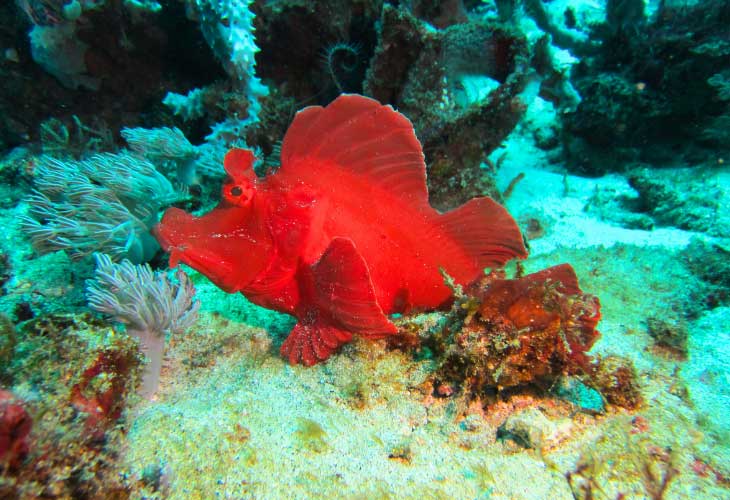
Paddle Flap Scorpionfish (Rhinopias eschmeyeri)
Rare and highly sought after by underwater photographers, this species has broad, paddle-shaped fins and soft, flowing skin appendages. Its bright red or pink colouration contrasts its reef habitat, yet its motionless behaviour helps it stay undetected.
Paddle Flap Scorpionfish (Rhinopias eschmeyeri)
Devil Scorpionfish (Scorpaenopsis diabolus)
Named for its fearsome appearance, this scorpionfish has venomous spines and a stocky body. When threatened, it can expand its pectoral fins, revealing bold warning colors. Despite the name, it is non-aggressive unless provoked.
Denise’s Pygmy Seahorse (Hippocampus denise)
Flasher Scorpionfish (Scorpaenopsis macrochir)
This lesser-known species has extended pectoral fins used to startle predators. It is usually well-camouflaged, hiding among rocks and debris in sandy reef zones.
Flasher Scorpionfish (Scorpaenopsis macrochir)
Leaf Scorpionfish (Taenianotus triacanthus)
Unlike others, this species is flat and leaf-like, often swaying with water currents to mimic debris. It comes in various colours and is commonly seen in Bali’s coral reefs.
Pygmy seahorses are among the most fascinating and elusive creatures of the underwater world. With their tiny size and remarkable camouflage, they have intrigued marine enthusiasts and scientists alike. Found primarily in the coral reefs of the Indo-Pacific, these seahorses have adapted to blend seamlessly into their surroundings, making them difficult to spot even by the most experienced divers. Below is a detailed exploration of popular species of pygmy seahorses and their distinctive features.
Hippocampus bargibanti
Hippocampus bargibanti is one of the most well-known pygmy seahorse species, first discovered in the waters of Indonesia. It has a minuscule size, measuring only about 2.5cm in length. This species is frequently found hiding within red or orange sponges, which provide perfect camouflage. Its unique ability to blend into its habitat makes it incredibly difficult to spot, despite its relatively abundant population.
This species was discovered in the waters around Halmahera Island in Indonesia. It is tiny, measuring around 2cm, and often resides in brightly coloured sponges. H. satomiae is known for its body texture and colouration, which closely resemble the sponges they inhabit, providing excellent protection from predators.
Hippocampus denise
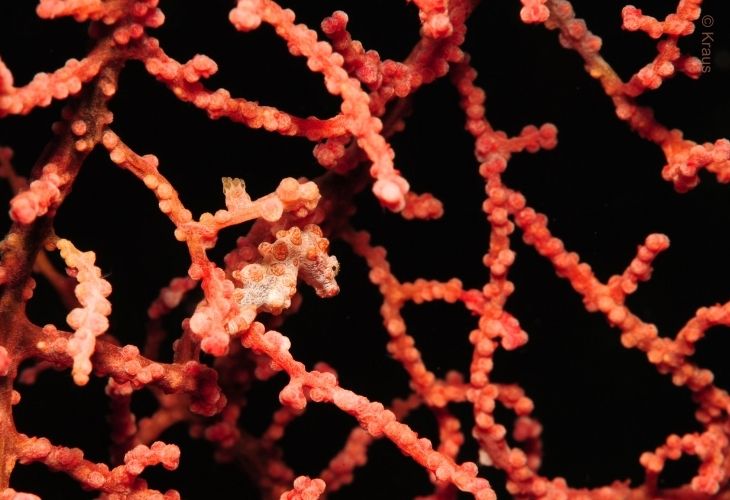
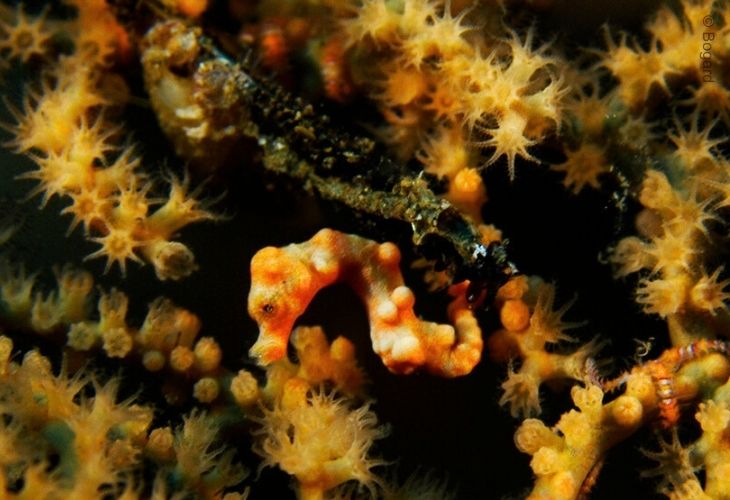
Known as Denise’s Pygmy Seahorse, this species is even smaller than H. bargibanti, with a length of about 1.5cm. They are typically found in smaller sponges or coral reefs, often with vibrant colours like pink or orange. Found at depths between 10 and 50 meters, they have a slim, textured body, giving them a distinct appearance compared to other seahorses.
Denise’s Pygmy Seahorse (Hippocampus denise)
Hippocampus colemani
Found in the waters around Australia and Papua New Guinea, H. colemani is a slightly larger and fatter pygmy seahorse species. With lighter colours, they often hide in contrastively coloured sponges or corals. These seahorses prefer deeper waters, usually between 30 to 40 meters in depth.
Hippocampus pontohi
One of the smallest pygmy seahorses, H. pontohi has a body length of just 1cm. They are typically found hiding in brightly coloured sponges, particularly pink ones. Their exceptional camouflage makes them incredibly difficult to spot, even in areas frequented by divers.
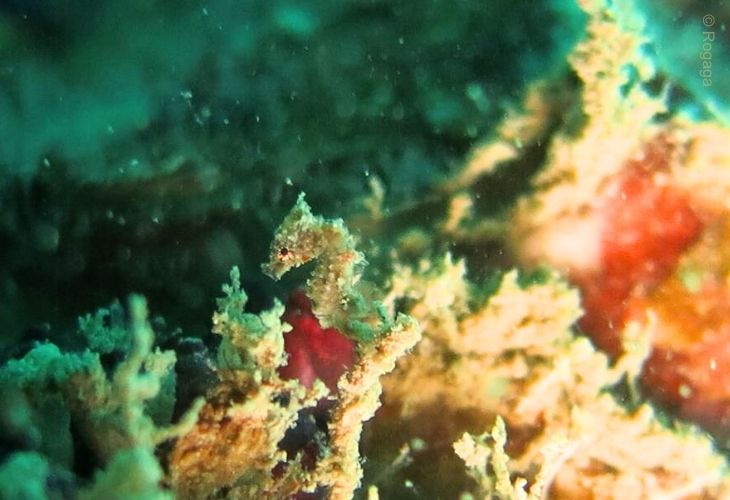
Also, Hippocampus severnsi known as Severn’s seahorse is a small, rare species found in the Indo-Pacific region. Known for its distinctive appearance, it typically inhabits shallow coral reefs and seagrass beds. Like other seahorses, it feeds on small invertebrates. The H. severnsi was considered a separate species but is now recognised as a variation of the Pontohi.
Severn’s Pygmy Seahorse (Hippocampus severnsi)
The Importance of Pygmy Seahorses
Pygmy seahorses are fascinating not only for their size and camouflage but also for their role in coral reef health. All species rely on coral reefs and the shelter provided by sponges and other marine structures. Their small size and sensitivity to environmental changes make them important indicators of reef conditions.
As pygmy seahorses depend on healthy, undisturbed reefs, their presence or absence signals the reef’s overall health. With coral reefs threatened by acidification, habitat destruction, and climate change, protecting pygmy seahorse habitats is crucial for maintaining marine biodiversity. In short, pygmy seahorses are not only marvels of nature but also vital to the conservation of coral reefs and the broader marine ecosystem.
Feeding wild fish might seem like a harmless activity, but it can have some unintended consequences for the fish and their surroundings. Whether it’s tossing bread into the water or offering food while snorkelling, feeding wild fish can change their natural behaviours, affect the environment, and impact the balance of the ecosystem. Here’s why it’s best to let wild fish find their own food.
Disrupting Natural Diets
Wild fish are adapted to eat what’s naturally available in their environment. When we introduce foods like bread or snacks, it can disrupt their diet and lead to nutritional issues. For example, bread doesn’t provide the nutrients fish need and can cause digestive problems. Over time, fish that are regularly fed by humans might start relying on these easy food sources, rather than finding their natural prey.
Spreading Disease
Feeding fish can also increase the spread of disease. When fish gather in one spot to eat, they’re more likely to come into contact with each other, which can lead to the spread of diseases and parasites. The food we provide might also introduce bacteria into the water, potentially affecting other marine life.
Disrupting Ecosystem Balance
Marine ecosystems rely on a balance between different species. Feeding wild fish can disrupt this balance. When fish populations grow because of feeding, it can lead to overgrazing of certain plants or a decrease in their natural prey. This imbalance can have effects that ripple through the ecosystem, affecting other species as well.
Changes in Behaviour
Fish that become accustomed to being fed by humans may start approaching people more often, expecting food. This change in behaviour can be problematic in some situations, especially if it affects the natural behaviour of the fish or leads to them becoming more dependent on human interaction.
Impact on Coral Reefs
Feeding wild fish in coral reef areas can be particularly harmful. Many reef fish help maintain the health of coral reefs by eating algae and keeping the ecosystem in balance. When these fish are fed by humans, their natural behaviour changes, which can lead to algae overgrowth that harms coral.
Legal and Environmental Considerations
In many places, feeding wild fish is restricted or not allowed due to the potential impact on the environment. Marine protected areas and conservation zones often have rules against feeding wildlife to help maintain the natural balance of the ecosystem. Respecting these rules supports the efforts of those working to protect these areas.